


























Malgorzata Michalek is a Key Opinion Leader at Trading Venture Club (TVC) — an education and tools business built on a decade of active crypto trading. She entered crypto ten years ago, left after a panic-induced exit, and returned five years later with a discipline-first approach that shaped everything she's built since. TVC publishes a six-book curriculum from beginner to advanced and is now unifying a daily news pipeline, token signals engine, action terminal, and Polymarket bot into one closed-loop, adaptive multi-agent system that learns from real trading results. Based in Dubai, UAE, Malgorzata trades actively through full market cycles and builds the tools she wishes existed while trading.
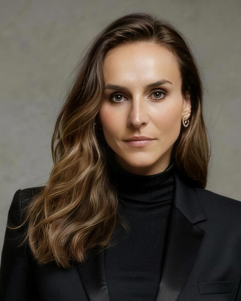
Malgorzata Michalek
Key Opinion Leader, Trading Venture Club Trading Venture Club
 United Arab Emirates August 19, 2026 18 min readBy Bitnxt Editorial Team
Malgorzata Michalek, Key Opinion Leader at Trading Venture Club (TVC), on a decade of crypto trading, building a closed-loop adaptive multi-agent system, writing six books before building an audience, and why prediction markets are the most underrated opportunity in crypto.
TradersFoundersAI & Web3
TradingAI AgentsPolymarketPrediction MarketsMulti-Agent SystemAuthor
Biography
Interview Summary
Malgorzata Michalek, Key Opinion Leader at Trading Venture Club (TVC), on a decade of crypto trading, building a closed-loop adaptive multi-agent system, writing six books before building an audience, and why prediction markets are the most underrated opportunity in crypto.
1
About You (The Story)
Q1.Walk us through your crypto origin story.
My crypto story has two beginnings, and the second one is the real one.
The first was ten years ago. I got in early — the space was still mostly forums, buggy exchanges, and arguments about whether Bitcoin would ever break four digits. I bought BTC, watched it crash hard, and I'll be honest: I freaked out. I told myself crypto wasn't for me, that it was too volatile, too irrational, too much. I closed the tab and walked away for five years.
Those five years cost me more than the initial loss ever did. Not just in missed upside, but in the years I didn't spend learning. When I finally came back, I came back completely differently. No more buying something because it was going up. No more emotional exposure without a plan. I started actually studying the market — technical analysis, risk management, position sizing, workflow — and I treated it like a craft instead of a bet.
That's when it clicked. What the market itself offered was unlike anything else: 24/7 price discovery, feedback loops that closed in hours instead of quarters, and tooling so bad that if you built anything half-decent for yourself, you already had an edge. I've now traded actively through multiple full cycles — bull peaks and bear capitulations — and everything I build today, from the six books to the terminal to a closed-loop, adaptive multi-agent system with feedback from real trading results, sits on top of two things: the pattern recognition from that active decade, and the humility from the five years I lost to panic.
If I hadn't quit the first time, I'd probably be a worse trader today. The pause taught me what fear feels like at the account level, and every rule I now trade by exists to make sure I never make that decision again.
Q2.Most people in crypto stumbled in by accident. What's your accident?
I didn't stumble in because of a token. I stumbled in because I was looking for a market where a solo builder could still ship something useful without needing a Bloomberg terminal or a licensed brokerage. Crypto was the only place that answered "yes" to that.
Q3.If you had to explain your role to someone at a dinner party (without jargon)?
I trade crypto, and I build the tools I wish existed while I'm trading. I've been running three things separately — a live action terminal, a Polymarket bot, and a daily "here's what I'm looking at" system with directional bias — and I'm now bringing them together into one closed-loop, adaptive multi-agent system that learns from its own results. The endgame is that even someone who doesn't know how to trade can plug in and get very satisfying outcomes. I also wrote six books along the way. So: half trader, half builder, and the writing is how I stay honest.
Q4.What's changed most about you since you entered crypto?
Patience with process, impatience with narratives. Early on I wanted to have a strong opinion on every coin. Now I care about the workflow — did I follow my rules today, is my sizing sane, did the bot behave — and I'm suspicious of anyone who has confident takes on 40 tickers.
Q5.What achievement are you genuinely proud of that most people don't know about?
I wrote and published six books on crypto trading and investing before I built the audience to sell them to — from beginner-level Crypto Investing Fundamentals up to the $55 flagship Crypto Investor's Guide, plus a full stack in between on technical analysis, risk management, tax, and advanced level-to-level trading. Most people build the audience first and try to justify a book later. I did it backwards on purpose — so that by the time anyone follows me, there's already a complete body of work waiting. That discipline, not the count, is what I'm proud of.
2
Your Company / Project (The Problem & Vision)
Q1.Tell us about Trading Venture Club — start with the problem.
The problem: the crypto content world is dominated by people who talk about trading and light on people who actually do it in public with real workflows. Newcomers can't tell the difference, so they follow the loudest voices and get burned. TVC exists to be the opposite of that — an education and tools business where everything I publish is downstream of a decade of actual trading. The book catalog walks a reader from Crypto Investing Fundamentals all the way through Advanced Technical Trading Tools and Trade the Levels, Win the Game, and the tools I'm building — a crypto terminal and a Polymarket bot — are what I use myself, not demos. TVC is the home base where all of it lives.
The next chapter is even bigger: unifying the tools I've been running separately — the daily news pipeline with directional bias, the token signals engine, the action terminal, the Polymarket bot — into one closed-loop, adaptive multi-agent system with feedback from real trading results. This isn't another "signal → buy/sell" service. It's a self-improving system built so that someone who doesn't know how to trade can still get very satisfying outcomes, because the system itself is learning from every trade it takes.
Q2.What's the one thing most people misunderstand about what you do?
People assume TVC is a content brand with trading as a hook. It's the opposite — the trading and the tool-building are the primary work, and the content is the exhaust. If I stopped trading tomorrow, TVC would have nothing to say. And the second misunderstanding: TVC isn't a signals shop. What I'm building is a self-improving multi-agent system, not a "buy this, sell that" feed. Very different product, very different economics.
Q3.If your biggest competitor disappeared tomorrow, would your business still matter? Why?
Yes — because I'm not competing with other crypto influencers for attention. I'm competing with the reader's own confusion. Whether or not they exist, someone new to crypto still needs a source that shows the work, not just the wins. That job doesn't go away.
Q4.Paint a picture: what does success look like for TVC in 3 years?
A tight audience — not millions, but tens of thousands of the right people — using TVC on two levels. The book catalog as a curriculum for the curious: Fundamentals → Introduction to TA → Advanced Technical Trading Tools → Trade the Levels. And the closed-loop adaptive multi-agent system as the flagship product for everyone else — including the people who don't want to become traders and just want their crypto exposure managed by something that actually learns. A revenue mix where books, the system, and paid research each carry their weight, so no single channel owns me.
Q5.Who's your ideal customer, and why are they hard to reach?
Independent, technically curious traders — people who can read a chart, can probably read code, and are tired of Discord-alpha culture. They're hard to reach because they don't retweet cheerleading content and they're allergic to hype, so the usual growth tactics repel them. The only way in is to publish work that respects their intelligence, consistently, for months.
There's a second customer too — the person who doesn't want to become a trader but wants their crypto exposure to be adaptive and rules-based instead of vibes-based. They aren't on crypto Twitter, so they're reached differently: through a public track record of the system doing what it says it does. Results are the marketing.
3
Industry Trends (The Bold Takes)
Q1.What trend are most people wrong about right now?
The idea that access to data is edge. In 2026 everyone has access — on-chain feeds, TA, AI-summarized news, LLM research. Access is table stakes. Real edge now lives in speed of interpretation, understanding the market regime you're in, confluence across signals, and continuous learning from your own trade outcomes. Anyone still selling "we plug into AI + on-chain, here's the signal" is selling something the market already priced out. Related fantasy: the idea that "AI agents will trade for you" is a consumer product. It's not. It's an institutional back-office tool with a consumer wrapper. Retail traders who plug into it without understanding what it's actually doing are going to be the exit liquidity.
Q2.Which sector is overhyped, and which is underrated?
Overhyped: memecoin infrastructure. It's a game of musical chairs with better UX. Underrated: prediction markets. Polymarket-style venues are quietly becoming the best real-time information aggregator we have, and almost nobody in crypto media is treating them seriously as a trading venue.
Q3.What does crypto need to stop doing to reach mainstream adoption?
Stop pretending complexity is a feature. Every "you just need to seed-phrase your hardware wallet into a multisig" explanation is a user we lose. The industry treats friction as a badge of sophistication when it's actually just bad product.
Q4.If you could solve one structural problem in the industry, what would it be?
Verifiable track records. Right now anyone can claim any return. If we had a neutral, on-chain-verifiable way to show trading performance without exposing strategy, the entire signal-vs-noise problem in crypto Twitter would compress overnight.
Q5.What scares you most about the future of crypto?
That regulation locks in the incumbents. The current regulatory arc favors whoever is big enough to hire the lawyers, which is the opposite of what this industry was supposed to enable.
4
Products & Strategy (The Direction)
Q1.What are you building now that excites you most — and why?
The closed-loop, adaptive multi-agent system I'm now unifying under one roof. As of now I've been running the pieces separately — a daily news pipeline with directional bias, a token signals engine, the live action terminal, the Polymarket bot. Each one works. The excitement is stitching them together with a feedback loop from real trading results, so the whole system gets better at interpreting what it sees instead of just reacting to it. In 2026 that's where the edge is — not in access to inputs, but in how fast and how correctly the system interprets them, weighs confluence, and learns from its own outcomes. And it's designed so someone who doesn't trade at all can still get very satisfying results.
Q2.Tell us about a product decision that surprised people.
Writing six books — a full beginner-to-advanced curriculum — before launching the audience. Everyone told me to build the following first and then monetize. I inverted it: do the hard, slow work first, then use it as proof-of-work for the audience I'm building now. It surprises people because it's the less "efficient" order. But it means the day someone follows me, they can go straight from a free Pre-Trade Checklist into Fundamentals into the $55 Crypto Investor's Guide — the ladder is already built.
Q3.What customer feedback completely changed your roadmap?
Readers of an early draft told me they wanted the workflow, not the theory, so I restructured the books around actual trades and screenshots instead of abstract principles.
Q4.How do you decide what not to build?
One rule: if it doesn't either generate content, generate PnL, or lower the friction between the two, it doesn't get built this quarter. The multi-agent system ships a new agent only when it demonstrably changes the system's decisions — not because a new data feed exists to plug in. "Nice to have" is the enemy.
Q5.What's your most contrarian opinion on the future?
That the winners in the next cycle won't be the biggest projects — they'll be the smallest teams with the highest signal density. Solo builders and pods of 2-3 people who can ship weekly are structurally advantaged over 40-person crypto orgs, and the market is going to reward that in a way it never has before. And on the trading side specifically: the winners won't be whoever has the fanciest data feeds or the biggest AI models — they'll be whoever has the tightest feedback loop between what the system decides and what actually happens. Systems that learn from their own trades will quietly eat the ones that just pipe in inputs.
5
Security, Trust & Risk (The Reality)
Q1.What's the biggest security misconception among crypto users?
That security is a product you buy — a hardware wallet, an audit, an insurance protocol. Security is a workflow. If your daily habits are sloppy, no amount of hardware saves you.
Q2.Tell us about a close call.
The closest calls are the quiet ones — the moments you almost re-used a seed, almost signed a permit, almost let a bot run unattended. I've had all three, and every rule in my current workflow exists because of one of them.
Q3.How do you think about risk differently than traditional finance?
TradFi risk assumes the venue doesn't disappear. Crypto risk starts with the assumption that any venue can vanish overnight — the exchange, the bridge, the wallet, the chain itself. So my risk framework has an extra layer TradFi doesn't need: counterparty and infrastructure risk sits above position risk, not next to it.
Q4.What should newcomers know about protecting themselves?
Three things: assume every DM is a scam, never sign a transaction you can't read in plain English, and size every position as if you're going to be wrong. Those three habits prevent 90% of what actually wipes people out.
Q5.What does "trust" actually mean to you in a trustless system?
Trust means verifiable behavior over time. Code you can read, track records you can check on-chain, and people who've been consistent through at least one cycle. "Trustless" was always a slogan — in practice, every interaction routes through a human or team you're implicitly trusting. Better to be honest about that than pretend the tech eliminates it.
6
Regulation & Compliance (The Pragmatism)
Q1.How has regulation shaped your business strategy?
It's shaped what I don't do more than what I do. TVC doesn't offer paid signals as a regulated advisory service, doesn't custody user funds, doesn't touch anything that looks like a security offering. That keeps the surface area small and the business clean, which — as a solo founder — is worth more than the revenue I could earn crossing those lines.
Q2.Are regulations slowing innovation or protecting users? Or both?
Both, but unevenly. In the EU, MiCA has given serious builders a clearer runway and pushed out the worst actors — that's a net win. In the US, it's still mostly enforcement-by-lawsuit, which pushes builders offshore without protecting anyone. Same word, opposite outcomes.
Q3.Which countries or regulators are getting it right?
The UAE, and it's not close. VARA in Dubai and the ADGM framework in Abu Dhabi did what almost nobody else has managed — built dedicated crypto regulators with a clear licensing path before crypto forced their hand. The philosophical difference is that the US posture is "prove you're not a security," and the UAE posture is "here's the license, here's what to comply with, welcome." That's why every serious exchange and fund I know has either opened a UAE office or is planning one — talent follows clarity, and right now the UAE has more of it than anywhere else.
Q4.What regulatory change would unlock the most opportunity?
Clear rules on token classification. Right now the ambiguity around "is this a security" freezes builders and lawyers into inaction. Any clear ruleset — even a strict one — is better than the current fog.
Q5.What's your honest take on decentralization vs. regulatory compliance?
They're not opposed, they're layered. The base infrastructure — chains, wallets, protocols — should be as decentralized as physics allows. The applications on top will get regulated whether we like it or not, and pretending otherwise is naive. The best builders design for both layers on purpose instead of hiding from the second one.
7
AI & Emerging Tech (The Future)
Q1.How are you thinking about AI x Crypto — real or hype?
Real, but narrower than the pitch decks claim. "AI agents transacting on-chain" is 90% hype and 10% real. AI as a tool that lets a solo builder do the work of a small team — writing code, digesting research, generating content from raw trading data — that's real, and it's how I actually work every day. The genuinely useful application of AI in trading isn't "AI decides for you" — it's AI as a multi-agent system that watches, interprets, and learns from actual trade outcomes. That's what I'm building. Not a black-box "AI trader," but a transparent, adaptive system where every agent has a job and the feedback loop from real results is what keeps the whole thing sharpening over time. That's where AI × crypto stops being a pitch deck and starts being a product.
Q2.What's the most underestimated technology in crypto right now?
Prediction markets. They're being treated as a novelty when they're actually one of the most powerful information-aggregation mechanisms ever built. Once people understand what a liquid, real-money forecast market can tell you about the world, it changes how you consume every other kind of information.
Q3.Which tech should everyone be paying attention to in 2026+?
On-chain identity that isn't KYC. Something that lets a wallet build a reputation without exposing the human. That's the missing primitive for a lot of things — reputation-weighted governance, undercollateralized lending, sybil-resistant airdrops — and I think it lands within the next 18 months.
Q4.Where do AI and blockchain naturally intersect for you?
In my own workflow constantly, and increasingly at the product level. The multi-agent system I'm building uses AI agents to parse news, weigh confluence across on-chain and TA signals, interpret market regime, and — critically — learn from every trade it takes on venues like Polymarket. My content engine uses AI to turn raw trading logs into publishable posts. The intersection isn't a "buy this" bot — it's a self-improving system that couldn't have existed even 18 months ago. That's the real AI × blockchain story: not autonomous agents doing magic, but adaptive systems doing better work than a solo trader could do alone.
8
Failures & Lessons (The Wisdom)
Q1.What's the biggest mistake you've made?
Publishing too little for too long. I sat on six books' worth of work while I "got everything perfect" instead of shipping in public and letting the audience shape the next chapter. Ten years of trading experience compressed into a book catalog with no marketing behind it — the work was strong, the distribution wasn't. The lesson: the audience is part of the writing process, not a reward for finishing it.
Q2.Tell us about a project or bet that didn't work out.
Publishing six books into silence. I spent years writing a full curriculum — beginner to advanced — put it all on the TVC website, and then did almost nothing to market it. The books were good, the distribution was zero. That's not a product failure, it's a founder failure, and I own it. The entire 90-day plan I'm running now is the correction. The bet that didn't work out was assuming quality would market itself.
Q3.What do you know now that would have saved you years?
That distribution is not a "later" problem. If you're building anything — a book, a tool, a bot — you should be publishing about it from day one. The years I lost weren't wasted on the wrong project. They were wasted on doing the right project in silence.
Q4.What advice would you give your younger self entering crypto?
Ignore prices for the first year. Read the code, read the whitepapers, run the tools. Anything you can learn from a chart, you can learn later — but the base intuition about how the machinery actually works is built when prices are boring.
Q5.What's the hardest lesson that stuck with you?
That being right and being profitable are different things. I've been right about a direction and lost money on it because my sizing or timing was wrong. That gap between analysis and execution is where most edge lives, and closing it is a lifetime project.
9
Advice & Influence (The Mentorship)
Q1.What advice would you give someone starting in your field today?
Two things. First: pick one narrow thing — not "crypto trading" but "one specific type of setup on one specific asset." Depth in one thing beats breadth in ten, especially now that AI has commoditized shallow expertise. Second: never take a trade without a written pre-trade checklist. I published mine for free on the TVC shop — use mine, use someone else's, write your own, I don't care. Just have one. The traders who blow up are the ones who improvise entries.
Q2.Who has influenced your thinking the most in crypto?
The builders and traders who publish their process, not their opinions. Peter Brandt for chart discipline — the man has posted every trade for decades. Cobie for the trader-who-thinks-out-loud archetype. Willy Woo for on-chain rigor. Vitalik for showing what building in public actually looks like. I learn nothing from anyone who only shares wins.
Q3.What book, podcast, or creator shaped your worldview?
Nassim Taleb — Fooled by Randomness and Antifragile — for teaching me that surviving is the first job and everything else is second. Ed Thorp's A Man for All Markets, because he's the archetype of what I try to be: mathematician who actually trades. Mark Douglas's Trading in the Zone for the psychology — my five-year pause is exactly what that book warns about. And Matt Levine's Money Stuff for how to think about finance without losing your sense of humor.
Q4.What common mistake do founders / traders / investors make repeatedly?
They confuse activity with progress. Traders trade too often, founders ship too many features, investors chase too many narratives. The compound cost of "just one more" is enormous, and almost nobody in this industry sits still long enough to notice.
Q5.If you could mentor one type of person in crypto, who would it be?
Technical women who trade or want to trade seriously. The talent pipeline is there and the community support is thin, and I know exactly which mistakes to help them skip because I made most of them.
10
Rapid Fire (The Personality)
Q1.Bitcoin or Ethereum — and why?
Bitcoin as the reserve, Ethereum as the workshop. I need both; the question is which one I sleep better holding, and that's Bitcoin.
Q2.Build or trade?
Both, on purpose. Building without trading gives you products nobody uses; trading without building gives you opinions nobody needs.
Q3.DeFi or CeFi — where's the future?
DeFi for the infrastructure, CeFi for the on-ramp. The winners will be hybrids that hide the seam.
Q4.Layer 1 or Layer 2?
Layer 1 for security, Layer 2 for anything a user actually touches.
Q5.Long-term investor or thrill-seeking trader?
Systematic trader with a long-term book underneath. The book is what keeps me calm.
Q6.Optimist or realist about crypto's future?
Realist, which in this industry is what "optimist" looks like once you've been here five years.
Q7.Your go-to tool for staying sane while building?
A hard cut-off on trading hours. When the session ends, the terminal closes — otherwise the day eats itself.
Q8.One word to describe crypto's future?
Layered.
11
Favorites & Discovery (The Curator)
Q1.What's a project outside your niche that impressed you?
Farcaster. The Merkle team spent years building a proper decentralized social protocol — clean developer experience, sensible economics, no token launch to farm attention — while every other "SocialFi" project was chasing airdrops and pump narratives. That's exactly the kind of unglamorous, ship-the-primitive work I respect. When the noise clears, the ones who quietly built infrastructure are the ones still standing.
Q2.Any emerging protocols or tokens that have your attention?
Hyperliquid — the way they've quietly taken serious perps volume off centralized venues is the most impressive execution story in DEX trading right now. And Limitless — decentralized prediction markets on Base, which is probably where the next generation of infrastructure for what I'm building with Polymarket lives. Both are teams shipping better rails while everyone else argues about narratives.
Q3.What's your favorite crypto tool that most people haven't heard of?
Aggr.trade. Free, browser-based, stitches live orderbooks and liquidation feeds from every major venue into one clean interface. For level-to-level trading it's invaluable — you can see exactly where liquidity is stacked before price gets there. Almost nobody outside serious perps traders knows it exists, which is a shame because it's better than tools ten times its (nonexistent) price.
Q4.Which exchange or infrastructure do you use regularly?
Bybit for perps and active spot — deep liquidity, clean API, fee structure that works at my frequency. Kraken for the slower book, anything I'm not actively trading. Polymarket for prediction markets, obviously — my bot lives there. And Ledger for cold storage; anything I want to sleep well holding never touches an exchange overnight.
Q5.What's the best crypto conference you've attended?
Honestly, I've spent the last few years deep in the work rather than on the circuit — I'm just now stepping into that world as the audience side of TVC comes online. The higher-signal moments so far have come from small Warsaw and Kraków builder meetups, which is where a lot of quiet CEE crypto work actually happens. Token2049 in Dubai is next on my list — it's the one that seems to combine serious builders with real capital and no tourist crowd.
12
Looking Forward (The Vision)
Q1.Where do you see TVC in the next 5 years?
A durable independent research and product business. Book revenue as the foundation, plus subscription revenue from the unified adaptive multi-agent system — with a fully public, live track record that acts as its own marketing. The system is the flagship: closed-loop, self-improving, priced for people who want serious results without wanting to become traders. Small team, high margin, and a reputation that means "if TVC published it, it's real."
Q2.What opportunity is everyone sleeping on right now?
Prediction markets as a serious trading venue. Everyone treats them as either a betting site or a political curiosity. They're neither — they're the cleanest liquid expression of "is this going to happen?" that finance has ever produced, and the tooling around them is 5 years behind where it should be.
Q3.What does the crypto industry need to hear but doesn't want to?
That most of what we build has no user. We keep launching L2s, restaking protocols, and points programs to each other. The real growth is going to come from the boring, unglamorous work of making one thing so useful that a normal person outside the industry pays for it. And on the trading side specifically: most "AI-powered" crypto products are still selling access to inputs when the market has already figured out that edge is in interpretation and feedback loops. Anyone still shipping "signal → buy/sell" as their product hasn't caught up to 2026.
Q4.What's your message for the Bitnxt community?
Trust the people showing the work, not the ones showing the wins. Every serious builder or trader I know is quieter than you'd expect and more consistent than seems interesting. Follow that pattern and you'll skip years of noise.
Q5.Anything you want to build or explore next?
A fully public dashboard for the whole unified adaptive system — every agent visible, every trade, live PnL, and — most importantly — visible learning: what the system got wrong last week and how the next week's behavior changes because of it. And beyond that, a paid access tier for people who want the system's decisions delivered without wanting to become traders themselves. You see the workflow, not just the conclusion.
13
Bonus: Founder-Specific
Q1.Why you? What unique insight did you have?
I sit at an unusual intersection — a decade of active crypto trading, a full published curriculum from beginner to advanced, active trading via a terminal and bot with an improving win rate I wrote myself, and the technical ability to ship the tools. Almost every crypto founder has one or two of those. Combining all four — trader, author, quant, builder — means TVC can produce content, tools, and research that a single-discipline founder structurally can't. And crucially, I'm not building a signals service. I'm building a closed-loop, adaptive multi-agent system that learns from real trades — the kind of product that requires you to actually trade, actually write, actually code, and actually understand where 2026 edge really lives. That combination is rare enough to matter.
Q2.How did you get your first 100 users?
I'm getting them right now, in public. The first 100 are coming from a 90-day content sprint on X and LinkedIn built entirely around real trades and workflow — every daily setup, every Polymarket bot recap, every screenshot from the terminal. The free Pre-Trade Checklist converts them into the funnel; the six-book catalog does the rest. If you want to watch it happen in real time, you can — that's the whole point.
Q3.What moment made you think, "This is actually working"?
The first time a complete stranger — no relationship, no referral, someone I'd never interacted with — bought the $55 Crypto Investor's Guide. I remember checking the notification twice to make sure it wasn't a friend testing the checkout. That was the moment the work stopped feeling like a private hobby and started feeling like a business. Everything else — the bot, the terminal, the content sprint, the multi-agent system — is built to make that moment repeatable.
Q4.Have you raised funding? What surprised you about it?
TVC is self-funded on purpose. The surprise is how much clarity that forces — every euro spent has to route back to either trading, tools, or content that supports book sales. No investor money means no permission to be vague about what actually generates return.
Q5.What's the gap between your vision and current reality?
Audience. The product is real — six books already published, a working terminal and Polymarket bot with a track record, and the multi-agent system now coming together into one product. The gap is the number of people who know it exists. The next 90 days are entirely about closing that gap on X and LinkedIn.
Q6.How do you attract people who believe in your mission?
By making the mission legible. Not with a manifesto, but by publishing the work so consistently that the mission becomes obvious. Anyone who reads three weeks of my posts either gets it and stays, or doesn't and leaves — both outcomes are fine.
14
Bonus: Trader-Specific
Q1.Describe your trading philosophy in one sentence.
Trade the levels, respect the liquidity, size for survival — then let repetition do the heavy lifting.
Q2.What chart pattern or indicator do you actually trust?
Level-to-level structure combined with liquidity behavior — I wrote a whole book about it (Trade the Levels, Win the Game). Swing failure patterns at a well-defined level, confirmed by where liquidity actually sits and how volume prints through it, is the setup I trust most. Indicators lie in isolation; a clean level with a real reaction is much harder to fake. Volume Profile and Fair Value Gaps are the supporting cast — I use them to confirm, not to enter.
Q3.Walk us through your biggest win — and biggest loss.
Biggest loss is easy, because it's the story that made me who I am: my initial BTC position ten years ago, before I had any system. No plan, no invalidation, no exit strategy. Price crashed, I panicked, sold at the bottom, walked away for five years. Later I also blew a few accounts. The rule that came out of it is the reason I trade at all today: never enter a position without a written invalidation and at least two planned exits. That's literally the first line of the free Pre-Trade Checklist I now give away.
Q4.How do you manage emotions when the market turns against you?
Pre-committed rules and pre-committed size. If my rules say I'm out, I'm out — no re-negotiation with myself in real time. The emotional work happens before the trade, not during it.
Q5.What's the most common mistake traders make?
Sizing up after a win. The dopamine of a good trade is when your risk management is weakest, and that's when the account-ending trade happens. The rule that saves you is: your size doesn't change because of your last trade.
Q6.What's your risk management rule that saves your ass?
The pre-trade checklist. Nothing gets entered until I've walked the same checklist every time — level, invalidation, size, R:R, correlation, catalyst. I published it as a free download precisely because it's the single most valuable rule I have, and giving it away costs me nothing while it prevents newer traders from taking the trades that end accounts.
15
Bonus: Developer-Specific
Q1.Which blockchain is the most fun to build on — and why?
Polygon, because it's boring in the best way. My Polymarket bot lives there, and boring is exactly what you want under a trading bot — cheap, fast enough, no gas-spike surprises that eat your edge overnight. I'd rather spend my time on trading logic than transaction plumbing. The chains that are "fun to build on" are usually fun the way wilderness survival is fun.
Q2.What's the biggest technical debt in the crypto space?
Wallet UX. Every serious app has to route around the fact that a normal user cannot safely sign a transaction. Until that's solved, we're building sports cars with no brakes.
Q3.What developer tools are still missing?
A good, boring, reliable framework for building trading bots against multiple venues at once with proper backtesting and risk controls baked in. Everyone rolls their own, which means everyone reinvents the same bugs.
Q4.Tell us about a technical problem that took you months to solve.
Building a reliable signal pipeline from prediction market prices without getting rekt by low-liquidity noise. The core problem: a thin market can show a "signal" that's really just one participant nudging the book. The pipeline had to distinguish between real information moving the price and noise created by low depth, and it took months of feeding real trades back into the classifier before the false-positive rate was low enough to actually trade on. It's the exact kind of problem that only gets solved with a feedback loop, not with a smarter model.
Q5.What advice would you give someone learning blockchain development?
Build something you'd personally use, no matter how small. A dashboard, a bot, a script that automates one thing you do manually. The reason 90% of tutorials don't stick is because they solve a problem the learner doesn't have.
Q6.Open source vs. proprietary — where's the line for you?
Open source what teaches — the frameworks, the ideas, the boring plumbing. Keep proprietary what has an edge — the specific signal logic, the parameters, the workflow. Both are honest, and confusing them is how people either give away their alpha or gatekeep useful knowledge.
By Bitnxt Editorial TeamLast updated Aug 19, 2026
Want to be featured on Bitnxt?
Share your crypto journey, startup, product, investment insights, trading strategies, or blockchain innovation with thousands of readers worldwide.
- Increase brand visibility
- Build authority & credibility
- Improve SEO with a permanent interview page
- Reach crypto investors
- Connect with potential partners
- Showcase your products & innovations
- Share your founder's vision
- Reach media & journalists
- Attract new customers
- Grow your community
- Build your personal brand
- Gain long-term organic exposure


