

























Sathvik Vishwanath is the Co-Founder & CEO of Unocoin, India's early Bitcoin and cryptocurrency exchange, started in Tumakuru in 2013. He entered crypto after experiencing the friction of digital payments in virtual-world technology, and co-founded Unocoin with Sunny Ray, Harish B.V. and Abhinand Kaseti to give Indians a simple, reliable way to buy, sell and store Bitcoin. Over more than a decade, Unocoin has grown from a Bitcoin-focused platform into a broader digital-asset platform offering systematic buying plans, INR access, crypto withdrawals, and Bitcoin and stablecoin payments via the Lightning Network. Sathvik's focus is on making crypto accessible, understandable and useful for ordinary Indian users while maintaining strong standards around security, compliance and customer trust.
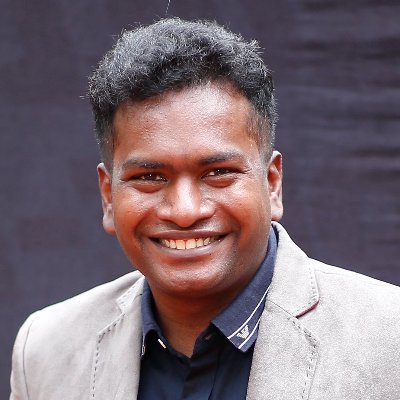
Sathvik Vishwanath
Featured Unocoin
Sathvik Vishwanath, Co-Founder & CEO of Unocoin — India's early Bitcoin and crypto exchange started in Tumakuru in 2013 — on building crypto access for India, surviving regulatory uncertainty, systematic Bitcoin buying, and why utility is the future of crypto.
Biography
Interview Summary
Sathvik Vishwanath, Co-Founder & CEO of Unocoin — India's early Bitcoin and crypto exchange started in Tumakuru in 2013 — on building crypto access for India, surviving regulatory uncertainty, systematic Bitcoin buying, and why utility is the future of crypto.
About You (The Story)
Q1.Walk us through your crypto origin story. What was the moment or problem that pulled you into this space?
My entry into crypto came from a problem I experienced before I fully understood Bitcoin. I was involved with virtual-world technology where users could move money into a digital environment, but transaction fees could take a meaningful part of the value. That experience made me curious about whether money could move digitally with much lower friction. I discovered Bitcoin, began attending cryptocurrency meetups in Bengaluru, and saw another problem: people were interested in Bitcoin, but there was no simple, reliable way for Indians to buy, sell and store it. That gap became the starting point for Unocoin.
Q2.Most people in crypto stumbled in by accident. What's your accident?
In a way, my "accident" was discovering Bitcoin while working around virtual economies. I was initially interested in the technology and the payment problem, not in crypto prices. The more I learned, the more I realised that Bitcoin could become an important financial technology. That eventually turned into the decision to build Unocoin with Sunny Ray, Harish B.V. and Abhinand Kaseti.
Q3.If you had to explain your role to someone at a dinner party (without jargon), how would you describe it?
I would say: I help build a company that makes crypto easier and more accessible for people in India. My job is a mix of product, technology, strategy, people and long-term decision-making. At the end of the day, it is about solving customer problems and building a business that can last.
Q4.What's changed most about you since you entered crypto?
Patience. In the early days, everything moved very quickly and we had to make decisions with incomplete information. Over time, I have learned that building in a new industry is less about chasing every new trend and more about staying focused through uncertainty, listening to customers and making decisions that can survive different market cycles.
Q5.What achievement are you genuinely proud of that most people don't know about?
I am proud that Unocoin continued to operate and serve customers through periods when the future of crypto in India was genuinely uncertain. Building an exchange is not only about technology; it is about trust, compliance, security and operational discipline. Staying committed through those difficult periods is something I value as much as any funding or growth milestone.
Your Company / Project (The Problem & Vision)
Q1.Tell us about Unocoin. But start with the problem you're solving—not the product.
The original problem was access. In 2013, Indians interested in Bitcoin had very few straightforward ways to buy, sell and hold it. We wanted to build a platform that made Bitcoin understandable and accessible to ordinary Indian users. Over time, Unocoin expanded from a Bitcoin-focused platform into a broader digital-asset platform, while keeping that original focus on simplicity and access.
Q2.What's the one thing most people misunderstand about what you do?
People sometimes see an exchange only as a place to trade. For us, the bigger responsibility is building the infrastructure around access: onboarding, KYC, INR access, self-custody, crypto withdrawals, security, trading, transfers, education and customer support. The hard part is making all of that work reliably while the technology and regulatory environment continue to evolve.
Q3.If your biggest competitor disappeared tomorrow, would your business still matter? Why?
Yes. The need exists independently of any single competitor. People will continue to need trusted, compliant and usable infrastructure to access digital assets. Competition is healthy because it forces the industry to improve, but Unocoin's reason to exist is the customer problem, not the presence of another exchange.
Q4.Paint a picture: What does success look like for your company in 3 years?
I want Unocoin to be one of the most trusted and easiest-to-use digital-asset platforms for Indian users. I would like us to make crypto feel less intimidating, provide stronger utility beyond trading, and build products that people can understand without needing to be crypto experts. Trust, security, regulatory discipline and a great user experience should be the measures of success.
Q5.Who's your ideal customer, and why are they hard to reach?
Our ideal customer is someone who wants straightforward access to digital assets but does not want to become a full-time crypto trader. They may be new to the category, long-term focused, or interested in practical use cases. They are hard to reach because crypto has accumulated a lot of jargon, speculation and noise. Our job is to remove that friction.
Industry Trends (The Bold Takes)
Q1.What trend are most people wrong about right now?
I think the industry still overestimates how quickly users will adopt products simply because the underlying technology is impressive. Mainstream adoption will happen when the experience becomes as intuitive as the financial apps people already use. The technology has to disappear into the experience.
Q2.Which sector is overhyped, and which is underrated?
Short-term narratives around individual tokens can become overhyped very quickly. On the underrated side, I would put infrastructure, security, compliance technology and payments. These areas are less exciting on social media, but they are what make a durable industry possible.
Q3.What does crypto need to stop doing to reach mainstream adoption?
It needs to stop making ordinary users feel that they need to understand every technical term before they can participate. We also need less focus on speculation as the only story. Better education, simpler interfaces, responsible product design and real utility will do more for adoption than hype.
Q4.If you could solve one structural problem in the industry, what would it be?
I would solve the gap between innovation and clarity. Businesses need clear, proportionate rules so they can invest in security, compliance and products without operating in permanent uncertainty. Users also need clarity about risks and protections.
Q5.What scares you most about the future of crypto?
The biggest concern is that bad actors or poorly designed products could damage user trust in the broader technology. Crypto is still an emerging industry, so every major failure affects perception beyond the individual company involved. Security, transparency and responsible risk management therefore matter enormously.
Products & Strategy (The Direction)
Q1.What are you building now that excites you most—and why?
I am most interested in products that move crypto from being something people mainly watch or trade into something they can use more naturally. That includes improving the everyday user experience, simplifying recurring buying through Systematic Buying Plans, expanding useful crypto services and making transactions faster and easier. We have also been exploring Bitcoin and stablecoin payments through the Lightning Network because the real test of crypto is whether it can become useful in everyday life.
Q2.Tell us about a product decision you made that surprised people.
One example is our focus on systematic buying rather than making every product about active trading. Unocoin introduced Systematic Buying Plans early because we saw that many users wanted a disciplined way to accumulate Bitcoin and Ether rather than constantly watch prices. That decision reflected our belief that crypto products should serve different user behaviours, not only active traders.
Q3.What customer feedback completely changed your roadmap?
A consistent theme from customers has been that crypto needs to feel simpler. People want fewer steps, clearer information and practical guidance. That feedback has influenced how we think about onboarding, product education, recurring buying and the overall app experience.
Q4.How do you decide what not to build?
We ask three questions: Does it solve a real customer problem? Can we operate it safely and responsibly? And does it fit the long-term direction of the company? If the answer to those questions is weak, we would rather not build it even if the idea is popular for a few months.
Q5.What's your most contrarian opinion on the future?
I do not think the future belongs to one chain, one token or one model. The winning platforms will be the ones that make the underlying complexity invisible to users. People care about speed, cost, reliability and usefulness; they generally do not want to think about which technical component is operating underneath.
Security, Trust & Risk (The Reality)
Q1.What's the biggest security misconception among crypto users?
The biggest misconception is that security is only the exchange's responsibility. A secure ecosystem needs both platform-level controls and good user behaviour. Users should protect passwords, enable two-factor authentication, verify links and never share OTPs or private keys. On the platform side, security has to be built into custody, access controls, monitoring and operations.
Q2.Tell us about a close call—a security issue or risk you navigated.
We cannot disclose specific security threats or incidents, but security is something we take very seriously. As a crypto platform, we are continuously targeted and have to stay on top of potential threats. Our approach is to maintain strong security practices, monitor risks continuously, and keep improving our systems rather than waiting for an incident to happen.
Q3.How do you think about risk differently than traditional finance?
Crypto combines financial risk with technology and operational risk. Price volatility is only one part of the picture. You also have wallet addresses, irreversible transactions, smart-contract risks in some ecosystems, cybersecurity and rapidly changing market infrastructure. That means risk management has to cover the entire user journey, not only the asset price.
Q4.What should newcomers know about protecting themselves?
Start with the basics. Use a strong, unique password and two-factor authentication. Never share OTPs, passwords or private keys. Check the website or app before entering credentials, be careful with links and remember that crypto transactions can be irreversible. Most importantly, do not invest money you cannot afford to lose.
Q5.What does "trust" actually mean to you in a trustless system?
Trustless technology does not mean people stop needing trust. It means some forms of trust can be replaced by transparent rules and technology. But users still need to trust the companies providing interfaces, custody, compliance and support. For an exchange, trust means doing what we say, protecting customer assets, being transparent about risk and taking responsibility for the infrastructure we operate.
Regulation & Compliance (The Pragmatism)
Q1.How has regulation shaped your business strategy?
Regulation has been part of Unocoin's story from the beginning. We were operating in a new category in 2013, so we had to think seriously about KYC, customer verification and responsible operations even before the industry had clear frameworks. Today, compliance is not a side function; it is part of product design, risk management and business strategy.
Q2.Are regulations slowing innovation or protecting users? Or both?
It can be both. Poorly designed regulation can slow useful innovation, but clear and proportionate regulation can protect users and give responsible companies confidence to invest. The goal should be to reduce harmful activity without making legitimate innovation impossible.
Q3.Which countries or regulators are getting it right?
The most useful models are the ones that provide clear definitions, licensing or registration pathways, strong AML controls and proportionate consumer safeguards while allowing responsible businesses to innovate. The important thing is clarity and consistency rather than simply copying another country's framework.
Q4.What regulatory change would unlock the most opportunity?
Greater clarity around how digital-asset businesses can operate, what services are permitted, and how different categories of crypto assets are treated would help enormously. Clear rules reduce uncertainty for businesses, investors and users.
Q5.What's your honest take on decentralization vs. regulatory compliance?
I do not see them as mutually exclusive. Decentralized networks can operate according to open protocols, while companies providing regulated access points can comply with laws. The important question is where responsibility sits. If a company is onboarding customers and handling assets, it should take responsibility for compliance and security.
AI & Emerging Tech (The Future)
Q1.How are you thinking about AI x Crypto—is it real or hype?
There is real potential, but there is also a lot of hype. The strongest intersection is where AI reduces complexity: fraud detection, customer support, market information, developer tooling, automation and personalised education. The value should come from solving a real problem, not simply putting AI and blockchain in the same sentence.
Q2.What's the most underestimated technology in crypto right now?
I would say payment infrastructure and stablecoin rails are still underestimated. They can make digital assets useful for transfers and settlement even for people who are not interested in speculative trading.
Q3.Which tech should everyone be paying attention to in 2026+?
I would watch stablecoin infrastructure, Bitcoin Lightning, account abstraction, wallet UX, security technology and AI-assisted financial tools. The common theme is reducing friction between users and the underlying technology.
Q4.Where do AI and blockchain naturally intersect for you?
For Unocoin, practical intersections include fraud and anomaly detection, customer support, compliance workflows, personalisation and making complex crypto information easier to understand. Blockchain provides the financial rails; AI can make interacting with those rails more intelligent and accessible.
Failures & Lessons (The Wisdom)
Q1.What's the biggest mistake you've made—and what did you learn?
One thing I would have done differently is spend more on spreading awareness. In the early days, we focused heavily on building the product and infrastructure, but awareness and education are equally important in an emerging industry. The lesson for me has been that building something useful is only one part of the journey. People also need to understand why it matters and how to use it.
Q2.Tell us about a project or bet that didn't work out.
Selling merchandise for Bitcoin did not really work for us. We tried it for several years, between 2016 and 2020, but we found that people in India were not ready to spend Bitcoin on physical goods. They viewed Bitcoin more as a savings and investment asset than something they wanted to spend. It was a useful learning experience because it showed us how user behaviour can differ from the way we expect a technology to be used.
Q3.What do you know now that would have saved you years of struggle?
I would have spent even more time on customer education and operational scalability from day one. In crypto, technology can change quickly, but the fundamentals of trust, compliance, security and customer support do not.
Q4.What advice would you give your younger self entering crypto?
Do not confuse being early with being right. Listen to customers, stay close to the problem, build patiently and do not underestimate regulation or operational complexity. Markets change, but strong fundamentals compound over time.
Q5.What's the hardest lesson that stuck with you?
Resilience is not simply surviving difficult periods. It is continuing to make good decisions when the environment is uncertain. Crypto has taught me that conviction is useful, but the ability to adapt is equally important.
Advice & Influence (The Mentorship)
Q1.What advice would you give someone starting in your field today?
Start by understanding the technology and the customer problem, not just the speculation part of it. Learn security and basic financial concepts, understand the regulatory environment, and build something small that solves a real problem. The industry still needs people who can explain complicated technology in simple language.
Q2.Who has influenced your thinking the most in crypto?
Naval Ravikant, Chamath Palihapitiya and Vinod Khosla have influenced my thinking significantly. Their perspectives on technology, entrepreneurship, capital and building companies have shaped how I think about long-term opportunities. I particularly value their focus on building enduring businesses and thinking beyond short-term trends.
Q3.What book, podcast, or creator shaped your worldview?
For the business side, Zero to One by Peter Thiel has been influential in how I think about building companies and creating something differentiated. On the technology side, Mastering Bitcoin by Andreas M. Antonopoulos has been particularly useful for understanding Bitcoin and the technology behind it.
Q4.What common mistake do founders/traders/investors make repeatedly?
They confuse activity with progress. More trades, more features or more attention do not necessarily mean more value. The better question is whether the decision improves the customer experience, risk profile or long-term business.
Q5.If you could mentor one type of person in crypto, who would it be?
Early-stage builders who are technically strong but need help turning an idea into a durable product. India has a deep technology talent pool, and there is a real opportunity to build global financial infrastructure from here.
Rapid Fire (The Personality)
Q1.Bitcoin or Ethereum—and why?
Bitcoin. It has the clearest monetary proposition, the strongest network effect and a long history of resilience. Ethereum is extremely important for programmable blockchain applications, but Bitcoin remains the asset that started this journey for me.
Q2.Build or trade?
Build. I entered crypto because I wanted to solve a problem, not because I wanted to trade.
Q3.DeFi or CeFi—where's the future?
Both. DeFi can create open financial infrastructure, while CeFi can make that infrastructure usable, compliant and accessible to mainstream users. The future will likely involve interaction between the two.
Q4.Layer 1 or Layer 2?
The one that gives users the best combination of security, cost, speed and usability. The technology should serve the user rather than the other way around.
Q5.Long-term investor or thrill-seeking trader?
Long-term builder.
Q6.Optimist or realist about crypto's future?
Realist with long-term optimism.
Q7.Your go-to tool for staying sane while building?
A simple customer-problem list and a clear priority list. Building gets noisy when you follow every trend.
Q8.One word to describe crypto's future?
Utility.
Favorites & Discovery (The Curator)
Q1.What's a project outside your niche that impressed you?
Ethereum has impressed me because of its ability to support smart contracts. It expanded the idea of what blockchain networks could be used for beyond simply transferring value.
Q2.Any emerging protocols or tokens that have your attention?
None in particular. I am more focused on the underlying evolution of blockchain infrastructure, cryptography, AI and decentralized systems than on following individual tokens.
Q3.What's your favorite crypto tool that most people haven't heard of?
Dune. I enjoy being able to go beneath the headlines and look at what is actually happening on-chain. Dune makes blockchain data accessible enough to explore patterns, activity and user behaviour without having to build an entire analytics stack yourself.
Q4.Which exchange or infrastructure do you use regularly?
I regularly use blockchain explorers, on-chain analytics tools, wallets and developer infrastructure. For me, the interesting part is understanding what is happening across the ecosystem rather than being tied to a particular exchange.
Q5.What's the best crypto conference you've attended?
The Global Bitcoin Conference in Bengaluru is a natural answer because it is closely connected to Unocoin's launch story. It was a time when the community was much smaller, but the conversations were incredibly energetic. Bringing entrepreneurs, developers, investors and early adopters into the same room made it particularly memorable.
Looking Forward (The Vision)
Q1.Where do you see Unocoin in the next 5 years?
I want Unocoin to be one of the most trusted and accessible digital-asset platforms serving India and, where appropriate, global users. The opportunity is much larger than trading. We want to make buying, holding, transferring and using digital assets simpler, while maintaining strong standards around security, compliance and customer trust.
Q2.What opportunity is everyone sleeping on right now?
The opportunity to make crypto useful without requiring people to become crypto experts. Stablecoins, Bitcoin payments, better wallets and simpler financial interfaces can bring digital assets closer to everyday financial behaviour.
Q3.What does the crypto industry need to hear but doesn't want to?
Not every token needs to survive. Not every trend needs to become a product. The industry will mature when teams are judged more by usefulness, security, transparency and sustainable economics than by short-term attention.
Q4.What's your message for the Bitnxt community?
Stay curious, but stay grounded. Crypto is still a young technology, and there will be many cycles of hype and disappointment. Learn the fundamentals, understand the risks, protect your assets and focus on projects that solve real problems.
Q5.Anything you want to build or explore next?
We want to keep working on products that make digital assets easier to use in real life. There is still a lot of work to do around education, UX, payments, regulation and infrastructure.
Q6.How do you attract people who believe in your mission?
By being clear about the problem we are solving and being honest about the difficulty of the journey. People who join Unocoin need to care about building for the long term, not simply following the latest market narrative.
Exchange / Infrastructure-Specific
Q1.What's your biggest competitive advantage—be honest?
Longevity and experience are meaningful advantages. Unocoin started in 2013, so we have lived through multiple market cycles, regulatory changes and shifts in user behaviour. That experience has shaped our approach to security, compliance, operations and product design.
Q2.Security breaches are the nightmare scenario. How do you stay paranoid?
We treat security as an ongoing process, not a one-time certification. Unocoin uses layered controls including cold storage, encryption, access controls, two-factor authentication and operational safeguards. We also educate users because an exchange can build strong infrastructure, but users still need to protect their own credentials.
Q3.Which assets or services grew faster than you expected?
Bitcoin SIP grew faster than we expected. It showed us that there was significant interest among users who wanted a more systematic approach to accumulating Bitcoin rather than trying to time the market.
Q4.Regulatory compliance—helpful roadmap or moving goalpost?
Both can happen. Clear rules create a roadmap; uncertainty can feel like a moving goalpost. Our approach is to build compliance into the business rather than wait for perfect clarity before taking responsibility.
Q5.What innovation do most users have no idea you're building?
A lot of the most important work happens behind the interface: security, compliance, transaction infrastructure, liquidity and reliability. Users should not need to see all of that complexity, but it has to work every day.
Q6.What would your ideal user experience look like?
It should feel simple enough that a first-time user can understand what they are doing, what it costs and what the risks are without needing a crypto dictionary. Registration, INR funding, buying, selling, holding and transferring should be clear, fast and predictable.
Trader / Investor / Developer-Specific
Q1.What makes a crypto founder fundable in your eyes?
Trustworthiness and endurance. In an industry that is still evolving, founders need to be able to build trust and stay committed through different market cycles.
Q2.Which sectors are you actually betting on right now?
AI and robotics are two areas I find particularly interesting.
Q3.What red flags do you see in most pitches?
A common red flag is when founders are not clear about what they are trying to build or who exactly they are building it for. There also needs to be a clear understanding of the competitive landscape and why the proposed solution is different.
Q4.How do you evaluate tokenomics — or do you care?
Yes, I do. Tokenomics can provide useful signals about vested interests and the level of long-term commitment from the founders and other stakeholders. It is important to understand how the incentives are structured and whether they are aligned with the long-term development of the project.
Q5.What's the most misunderstood metric founders obsess over?
Transaction speed. We do not necessarily need networks processing thousands of transactions per second today. Networks can scale as actual demand grows. Focusing on raw transaction speed without considering actual usage and the broader infrastructure can sometimes miss the bigger picture.
Q6.What's your take on AI tokens vs. blockchain infrastructure plays?
I'm more interested in the infrastructure than the narrative. An AI token needs a real economic or coordination function to justify its existence. Simply putting "AI" and "token" together isn't enough. Infrastructure, on the other hand, is what enables the ecosystem to scale and can have applications beyond a single narrative.
Developer-Specific
Q1.Which blockchain is the most fun to build on — and why?
Ethereum, because it supports smart contracts and has a strong developer community around it. Having an active community makes it easier for developers to learn, collaborate and build.
Q2.What's the biggest technical debt in the crypto space?
One of the biggest forms of technical and ecosystem debt is the infrastructure built around short-term speculation. Pump-and-dump activity can create incentives that distract from building useful products and sustainable networks.
Q3.What developer tools are still missing?
More reliable native blockchain infrastructure and data providers are still needed. Developers need dependable infrastructure and high-quality data to build applications at scale.
Q4.Tell us about a technical problem that took you months to solve.
Upgrading underlying systems when we decide to make a major upgrade can be a complex process. It requires careful planning because changes to core systems need to be made without disrupting existing operations and while maintaining reliability.
Q5.What advice would you give to someone learning blockchain development?
Blockchain is a technology, but the more important question is what you can do with that technology. Developers should not spend all their time only understanding how blockchain works. They should also think about the problems they can solve with it and where the technology can create real value.
Q6.Open source vs. proprietary — where's the line for you?
Open source can help improve security and accelerate community building. Having more people review, test and contribute to technology can create strong advantages, particularly in an industry where transparency and trust are important.
Key Takeaways
- Unocoin was founded in 2013 in Tumakuru — one of India's earliest Bitcoin exchanges, born from the lack of simple, reliable access for Indian users.
- Systematic Buying Plans (Bitcoin SIP) grew faster than expected, proving demand for disciplined accumulation over active trading.
- Security is an ongoing process, not a one-time certification — requiring both platform-level controls and educated user behaviour.
- The future of crypto is utility: stablecoins, Bitcoin payments, and simpler interfaces that make digital assets useful without requiring users to become crypto experts.
Want to be featured on Bitnxt?
Share your crypto journey, startup, product, investment insights, trading strategies, or blockchain innovation with thousands of readers worldwide.
- Increase brand visibility
- Build authority & credibility
- Improve SEO with a permanent interview page
- Reach crypto investors
- Connect with potential partners
- Showcase your products & innovations
- Share your founder's vision
- Reach media & journalists
- Attract new customers
- Grow your community
- Build your personal brand
- Gain long-term organic exposure


