





























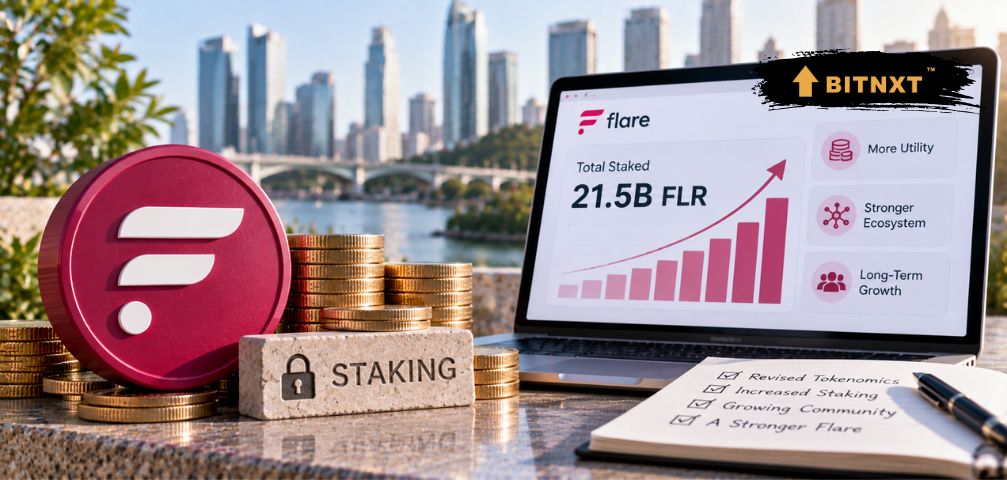
Flare's tokenomics overhaul is working, and the number that proves it is 21.5 billion: staked FLR has risen about 34% since July, from roughly 16 billion, with the staked share of supply climbing from 32% in April to 46% in late August, per DefiLlama Research. The mechanism behind the move is a carrot-and-stick redesign that rewards locking and punishes floating supply.
The redesign came in pieces. FIP.16 cut annual inflation from 5% to 3% on May 14, reducing the issuance cap from 5 billion to 3 billion FLR, about 2.6 billion gross annual issuance on an 87 billion supply. Locked P-chain stake now carries 5x signing weight over wrapped delegated FLR for the FTSO and FDC data protocols, which effectively forces any serious participant into illiquid lockups. July's Granite upgrade raised the validator stake cap to 300 million FLR and set a 20% minimum delegation fee floor. Meanwhile the C-chain base fee jumped from 25 to 500 gwei, pushing burn rates more than 10x above baseline, over 15.6 million FLR torched in 2026 so far.
Read the Fine Print Before Buying the Squeeze
Here is the skeptical reading, and it is not flattering. FIRE, the Flare Income Reinvestment Entity that collects protocol revenue, has gathered $31,438 since May across four streams: $18.2k from FAssets minting, $12.6k from FDC requests, $505 from destination tags, $9 from redemptions. Thirty-one thousand dollars. Against roughly 2.6 billion FLR of annual issuance, worth north of $30 million, Flare's real revenue covers about 0.1% of its inflation. This is still a token paying holders with its own mint, now with better optics: the burn floor and staking lockups manufacture scarcity while the actual cash-flow story, the one thing L1s promise and rarely deliver, remains a rounding error. The genuine growth signal sits elsewhere: FXRP in DeFi grew from 82 million in February to 144 million in August across about 24,000 Flare Smart Accounts, organic usage the tokenomics can build on, unlike the incentive-farm launches that end in exploits or leverage-driven altcoin rallies.
The 500 gwei base fee also cuts both ways: it accelerates burns, but it raises every dApp interaction cost for the 24,000 accounts actually using the network, a tax on the users whose growth justifies the thesis. And P-chain locking restricts capital mobility, so the 46% staked share is stickier than it looks, reassuring until a stress event makes exit queues the story.
Watch FIRE's revenue line next quarter. If $31k becomes $300k, the tokenomics redesign bought Flare time to build a business. If it stays at $31k, you are holding a well-engineered squeeze.


