






























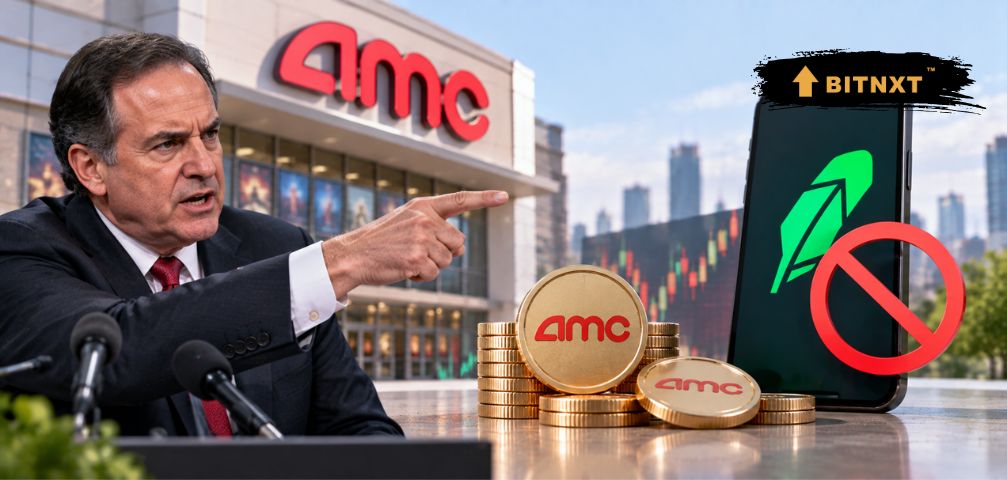
Tokenized AMC shares have drawn a public rebuke from the company itself, with CEO Adam Aron accusing Robinhood of building a product around AMC's name without its participation and promising to bring in outside securities counsel — the sharpest corporate objection yet to the brokerage's sprawling stock token empire.
"Robinhood apparently is behind an effort related to 'tokenized real-world assets including Stock Tokens' for AMC Entertainment," Aron wrote on X. "We have no connection to this at all, and do not condone it in any way." He described the practice as "contemptible" and "outrageous," and said AMC will ask outside securities counsel to examine the matter. The theater chain's objection lands as Robinhood's tokenized products approach genuine scale: its European platform advertises more than 2,000 Classic Stock Tokens tracking U.S. stocks and ETFs around the clock, and combined tokenized stock volume through Uniswap on Robinhood Chain passed $1 billion in August.
What the Tokenized AMC Shares Dispute Is Actually About
The controversy turns on the distinction between owning a share and holding a product that tracks one. Robinhood's Classic Stock Tokens are derivative contracts providing economic exposure to U.S. stocks, with Robinhood owning the supporting assets and holding them through a U.S.-licensed institution — but holders own no shares, receive no dividends and cast no votes. A separate generation of transferable ERC-20 Stock Tokens goes further onchain: these are tokenized debt securities issued by Robinhood Assets (Jersey) Limited, providing exposure without granting legal or beneficial rights against the companies whose shares they track. From AMC's perspective, a retail investor buying "AMC stock" in a crypto wallet is buying neither the company's equity nor its endorsement — while the branding implies otherwise.
The tokenized AMC tokens are unavailable to U.S. investors; Robinhood states its Jersey-issued Stock Tokens are not registered under U.S. securities laws and cannot be offered to U.S. persons. But the reputational exposure crosses borders regardless. Robinhood Chain launched July 1 with 95 tokenized equities and reached $431 million in total value locked within three weeks, with Robinhood's tokenized stocks then standing at roughly $14 million — against approximately $851 million for Ondo and $481 million for xStocks, according to a FalconX report. The chain's trading boom has amplified the products' visibility, and the SEC is simultaneously drafting rules for who legally owns tokenized securities.
The OpenAI precedent and the issuer backlash
AMC is following a trail blazed by OpenAI. In July 2025, the AI company publicly rejected Robinhood tokens linked to it: "These 'OpenAI tokens' are not OpenAI equity," OpenAI said, noting it had not partnered with or endorsed the offering. Robinhood CEO Vlad Tenev defended the product as indirect retail exposure to private assets through a special-purpose vehicle, but the underlying grievance was identical — a financial product carrying a company's name without its consent. That pattern now has a second, louder example, and the market is fragmenting in response: Base founder Jesse Pollak said in July that Coinbase and Base were working on 1:1-backed tokenized stocks supported by actual underlying shares, explicitly contrasting the structure with Robinhood's derivatives.
The unresolved question is legal rather than technical. Nothing requires a company's permission to sell a derivative tracking its publicly traded share price — that is what options markets have done for decades — and Robinhood's MiFID II-compliant European products carry disclosures stating holders gain exposure without rights. But tokenization adds distribution and anonymity that traditional derivatives never had: AMC tokens can be transferred between wallets, integrated into DeFi products and traded 24/5 by retail users who may never read the prospectus-style caveats. A derivatives label does not settle the confusion a ticker in a crypto wallet creates.
For tokenization as an industry, Aron's outburst is a useful stress test. The issuer-endorsed model — registered shares onchain with company participation — avoids exactly this fight, which is why exchanges pursuing it keep emphasizing issuer partnerships. Until the market consolidates around that structure, every company with a volatile retail following is now on notice: its stock may already be trading onchain, without it, in wallets that look like they belong to its shareholders.


