






























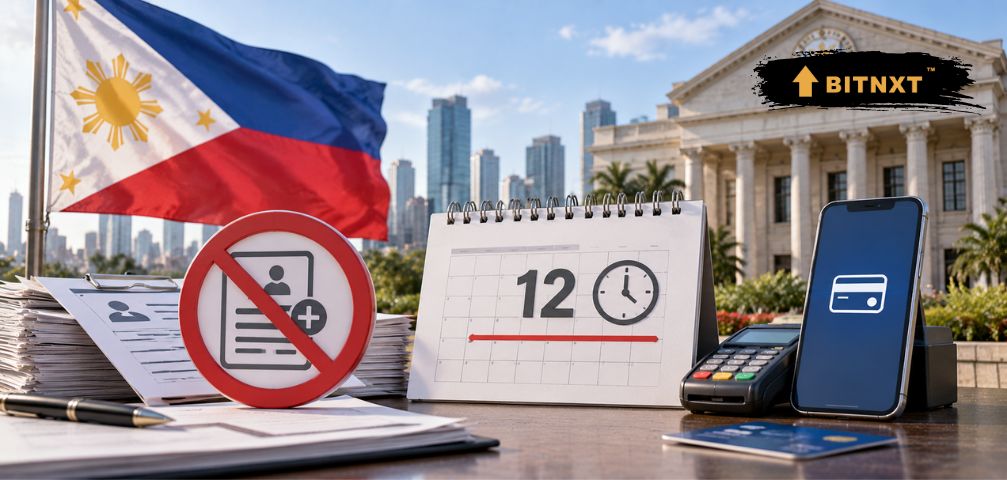
The Bangko Sentral ng Pilipinas wants to stop accepting new payment system operator applications for 12 months, and the crypto industry should read that as what it is: a regulator slamming the door on grey-market onramps while it rewrites the rules. The draft circular, published for consultation on Sept. 7, would suspend all new Operator of Payment System registrations under the National payment registration Systems Act while the BSP conducts what it calls a "holistic review" of its licensing framework.
The details are harsher than the headline. Pending applications submitted before the freeze get evaluated but no decisions, approval or denial, during the 12 months, and those applicants cannot start operating without separate authorization. The bigger hammer sits in the merchant-acquisition rules: BSP-supervised institutions offering merchant services must establish direct contractual relationships with regulated Virtual Asset Service Providers, ending the layered payment-facilitator arrangements that let offshore crypto platforms tap Philippine peso rails through intermediaries. Banks get six months to audit their existing arrangements and another six to remediate or terminate them. VASPs are explicitly grouped with casinos, gaming operators, adult businesses and money service businesses for enhanced monitoring. A centralized National QR Code Merchant Database will flag fraudulent or prohibited merchants across networks.
Who this payment registration freeze actually hits
The unstated target list writes itself. International firms including Binance have operated in the Philippines without BSP-issued VASP licenses, and the direct-merchant mandate effectively cuts uncredentialed foreign exchanges off from local fiat liquidity, forcing retail flow toward licensed domestic providers. In June, the BSP already tightened token listing and monitoring rules for VASPs. This is a consolidation play in one of the world's largest remittance markets: incumbents get a 12-month moat, foreign entrants get a locked gate. Binance's EU workaround showed how exchanges adapt when licensing regimes harden; the Philippine version removes the workaround by removing the intermediary.
Caveats before treating this as law. It is an exposure draft, open to industry feedback, and the BSP can modify the duration, timelines, or VASP scope before the final circular takes effect 15 days after publication. The BSP also notes that grouping crypto firms with casinos reflects risk-based supervision, not a claim they operate identically. Compliance costs will depend entirely on how broadly "covered payment arrangements" gets defined, and that definition does not exist yet.
The remittance market is the stake
Zoom out and the stakes are enormous. The Philippines is one of the world's largest remittance recipients, and the BSP's own push for regulated rails, stablecoin business accounts and similar dollar instruments, depends on knowing exactly who moves money through the system. Survival-driven crypto adoption is growing across emerging markets, and regulators in those markets now face the same choice: license and monitor the flow, or watch it route through channels they cannot see. The BSP chose visibility, with a freeze attached.
Watch two signals: the final circular's treatment of pending applicants, and whether the direct-merchant mandate survives consultation with its 12-month timeline intact. If it does, every crypto platform serving Filipinos either gets licensed or loses its rails, and other Southeast Asian regulators, watching the same grey-market dynamics, get a template they did not have to fight for.


