






























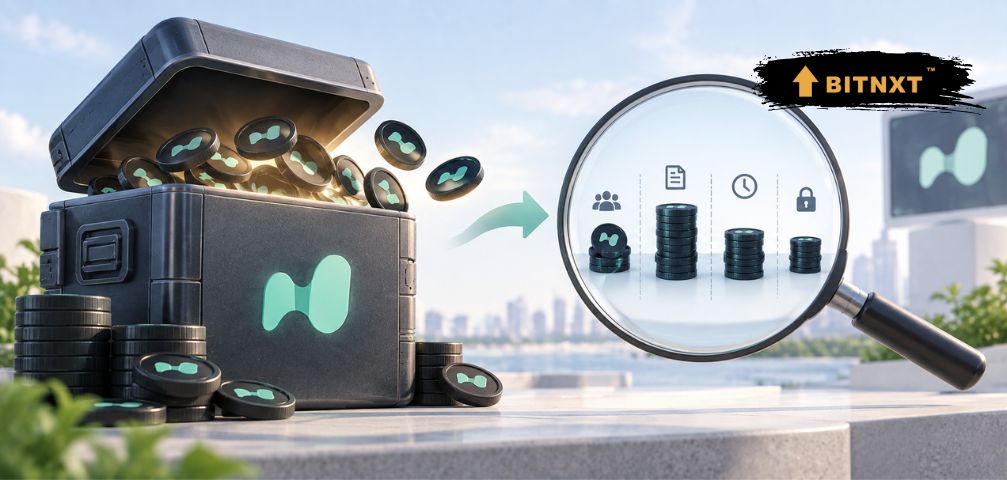
Hyperliquid just "unlocked" $820 million of HYPE and the price went up. The 9.92 million tokens released Sept. 6 at roughly $82.60 each hit the headlines as a supply shock, and the market treated it as nothing, because it mostly is nothing. Understanding why is the difference between trading tokenomics and trading headlines.
Start with who received the tokens. The vesting recipients are team members and core contributors on multi-year schedules with back-loaded releases; recurring tranches run 422,000 to 433,025 HYPE per cycle, and observers tracking those distributions note they have moved toward custody without pressuring price. These are stakeholders, not airdrop farmers. The airdrop generation, the cohort that dumps on day one, got their tokens in 2024. What unlocked Sept. 6 is compensation for people building the company, the least likely sellers in the cap table.
The buyback machine that eats supply
Then there is the offset. Hyperliquid's Assistance Fund runs an automated buyback purchasing roughly $1 million of HYPE per day, about $30 million a month, funded from protocol fee revenue, which pulls circulating supply off the market continuously. Against a daily buyback of that size, a scheduled release to long-horizon insiders barely registers in net supply terms, and the market's 50% monthly rally into the unlock reflects exactly that math. The token's total maximum supply is 1 billion with the price trading between $79.50 and $86.64, so the $820 million headline also overstates the real number: it marks tokens at peak price rather than their cost basis or their likely sale value. Bitwise's ETF buying another $10.5M the same week, plus the perps market's expansion, gives the demand side its own steady bid.
But be honest about the fragility underneath, because the misleading headline hides a genuinely misleading comfort. The buyback is funded by trading fees, and fees depend on volume. Hyperliquid processed $166 billion in 30-day perps volume against Lighter's $198 billion, which means the rival is now outrunning it, and if a macro drawdown thins volumes, the $1 million daily bid shrinks with it, precisely when vesting supply would be most tempting to sell. The buyback shield is volume-dependent. Bear markets kill it first.
How to read the next unlock headline
The template this article leaves you with works for any token: ask who received the tokens, on what schedule, against what offsetting demand. FDV-scaled headlines, like this one, count every locked coin at spot price and imply a flood; realized supply is what matters, and realized supply here goes to believers on slow schedules into a machine buying a million dollars a day. That is why "$820 million unlock" produced a rally, and why the same headline on a VC-backed token with cliff expirations would produce the dump the headline implies. The institutional wrapper market now prices this structure through products like BHYP, which means unlock literacy stops being optional trivia and becomes table stakes.
Watch the 30-day volume race with Lighter. As long as Hyperliquid's fee engine holds position, the buyback keeps absorbing whatever the vesting calendar prints, and unlocks stay non-events. The moment volume leadership slips for a full quarter, the same unlocks start mattering, and the headlines that cried wolf finally bring one.


