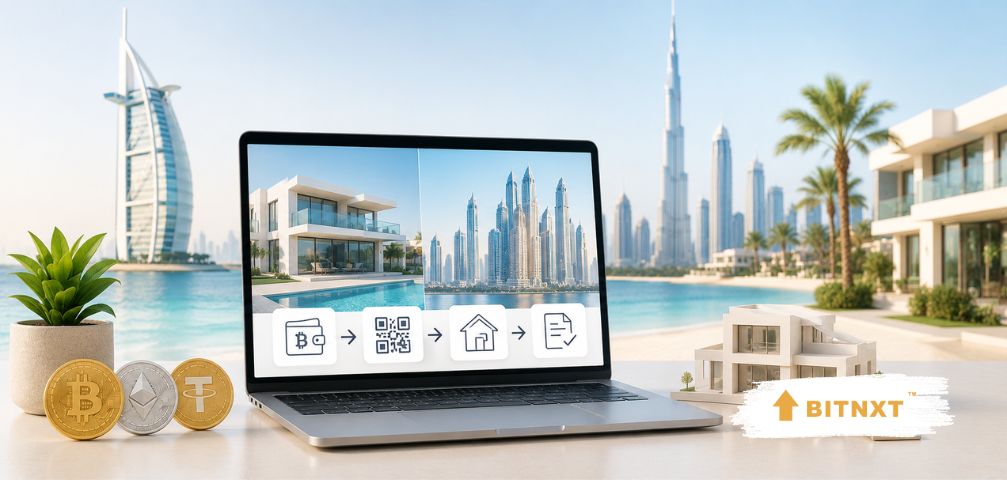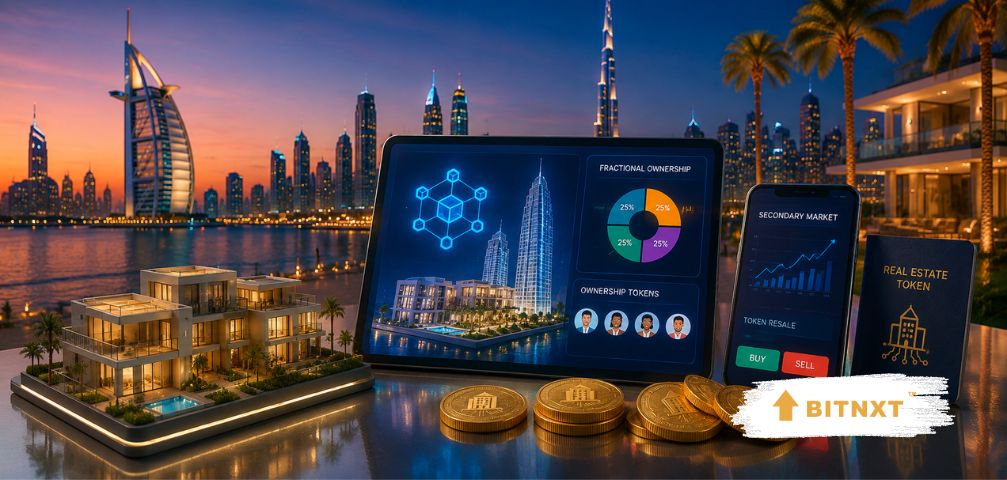
Dubai is quietly building one of the world’s most advanced real-estate tokenization frameworks. In February 2026, the Dubai Land Department (DLD) moved its Real Estate Tokenization Project into Phase II — a controlled pilot that, for the first time, allowed selected property tokens to be offered for resale under official supervision. For investors, this opens the door to owning a fraction of a Dubai property and, eventually, exiting that position without selling the whole unit.
But tokenized real estate is not the same as buying an apartment outright, and a property token is not the same as a title deed. This guide explains how Dubai real estate tokenization works in 2026, how fractional ownership differs from crowdfunding and REITs, what the new secondary-resale stage actually changes, and the checks every investor should run before committing capital.
Dubai Property Tokenization: Key Facts
Topic | Verified Position |
|---|---|
Official initiative | DLD’s Real Estate Tokenization Project under the REES innovation initiative. |
Public-sector partners | DLD works with VARA, the Dubai Future Foundation, and the Central Bank of the UAE; DLD leads the property-registration initiative. |
Current stage | Phase II: controlled testing and evaluation under DLD and VARA oversight. |
Secondary resale | Resale activity began from 20 February 2026 for roughly 7.8 million tokens within the controlled pilot framework. |
Who could join | The official 2025 launch limited access to UAE ID holders; wider participation is described as a future expansion. |
Payment in pilot | UAE dirhams only; DLD confirmed cryptocurrency was not used during the pilot phase. |
Long-term projection | DLD projects tokenized assets could reach AED 60 billion by 2033, equal to 7% of Dubai real estate transactions. |
Sources: DLD Phase I and Phase II announcements; VARA Phase II marketplace alert.
What Is a Property Token in Dubai?
A property token is a digital representation of a defined interest in a real estate asset. Instead of one investor buying an entire apartment, a single property can be divided into smaller investment units — each represented by a token — lowering the entry capital and making it easier to diversify across multiple assets. The trade-off is reduced control: ownership is shared, and decisions and sales are governed by the platform’s rules and the DLD-approved structure.
Crucially, the token is the digital unit connected to the fractional interest and its transfer mechanics — it is not a standalone ownership document. The DLD registry remains the authoritative ownership record, and the tokenization initiative is testing how to layer digital fractions on top of that registry in a way the law recognises.
Tokenization vs Fractional Ownership, Crowdfunding, and REITs
These terms are often used interchangeably, but they describe different things:
Fractional ownership means several investors each hold an interest in one specific asset. It describes who owns what share.
Tokenization is the digital, registry-linked method for representing and transferring those fractional interests. It describes how the ownership is recorded and moved.
Crowdfunding may use a company or contract structure to pool investor money into a property, often without direct fractional title.
REITs (Real Estate Investment Trusts) provide exposure to a managed portfolio of properties through traded shares, with income distribution rules set by regulation.
The practical differences show up in ownership evidence, income distribution, fees, and exit rules. A tokenized fraction gives you a direct, registry-linked stake in one property; a REIT gives you indirect exposure to a portfolio. Tokenization is the technology layer that can sit under fractional ownership, crowdfunding, or even REIT-like structures.
Is a Dubai Property Token the Same as a Title Deed?
No. A property token is not a standalone title deed. The DLD registry is the official ownership record; the token is the digital unit connected to the fractional interest and the transfer mechanics.
DLD’s initiative tests tokenization on title deeds, meaning the registry layer is central to the whole model. Before investing, ask three questions:
Exactly how does your share appear in DLD records?
Which document proves your ownership?
How does a resale update the ownership record?
A wallet screen alone is not proof of ownership. Investor rights must match the approved DLD and VARA framework — if a platform cannot show you how your fraction maps to the DLD registry, that is a red flag.
How Fractional Property Ownership in Dubai Works
The exact workflow depends on the authorised platform and offering, but the investor journey can be understood in five steps:
Choose an approved listing. Review the property, valuation, occupancy, expected income, fees, risks, and exit terms.
Complete eligibility and KYC checks. The platform confirms your identity and whether you are eligible to participate (in the 2025 launch, this meant holding a UAE ID).
Select an investment amount. Your contribution determines your fractional interest, subject to the listing’s minimum and maximum limits.
Pay and receive the recorded interest. You use the approved payment route (dirhams in the pilot), and the registry process connects your fraction to the ownership record.
Earn or exit under the terms. Rental income, governance decisions, and any resale follow the disclosed rules and the market mechanisms available.
A Simple Fractional Ownership Calculation
Illustrative ownership share = investor amount ÷ tokenized property value × 100
Example: AED 10,000 ÷ AED 1,000,000 × 100 = 1%. This illustration excludes fees, limits, and valuation changes. Always use the listing documents, because the amount offered for tokenization may differ from the full property value.
Can Dubai Property Tokens Be Resold in 2026?
Yes — but the accurate answer needs a qualification. DLD said resale activity for approximately 7.8 million real estate tokens would begin from 20 February 2026. It also described the activity as a controlled pilot designed to test market efficiency, operational readiness, governance, and investor protection.
VARA separately described Phase II as controlled testing and evaluation of additional functions, including secondary-market mechanisms. Investors should therefore not interpret “resale enabled” as a promise of continuous liquidity or universal access.
Liquidity: What Secondary Resale Actually Changes
A secondary mechanism may let an eligible holder offer tokens to another eligible buyer without selling the whole property — a meaningful shift for investors who previously faced an all-or-nothing exit. However, execution still depends on:
A willing buyer on the platform
A compliant transfer process
Platform availability and uptime
An acceptable price that both sides agree on
Demand, valuation, and rental performance remain the dominant factors in whether a resale actually completes. Tokenization improves the mechanism for exit; it does not guarantee the market for exit.
Tokenized Property vs Buying a Full Apartment in Dubai
Factor | Tokenized Fraction | Full Apartment |
|---|---|---|
Entry amount | Smaller, listing-specific fractional ticket | Full purchase price plus acquisition and ownership costs |
Ownership | Fractional interest under the approved registry and token structure | Direct ownership of the entire registered unit |
Control | Shared and governed by disclosed platform rules | Owner has full control over use, rental, and sale |
Exit | Resale via platform’s secondary mechanism (pilot stage) | Sell the whole unit on the open market |
Income | Pro-rata share of rental income, minus platform fees | Full rental income, minus service charges |
Golden Visa | Fractions below AED 2M generally do not qualify on their own | Property valued AED 2M+ can qualify for the 10-year Golden Visa |
For investors whose goal is residency, a full apartment above the AED 2 million threshold remains the clearer route to the Golden Visa. For investors whose goal is income and diversification with a smaller ticket size, tokenized fractions open a previously inaccessible market.
Can Foreigners Invest in Tokenized Real Estate in Dubai?
Yes, foreigners can invest — but with an important caveat about the current pilot. The official 2025 launch limited participation to UAE ID holders, meaning resident investors were the first to access tokenized listings. Wider participation, including for non-resident foreign investors, has been described as a future expansion of the programme.
For non-residents today, the practical path is to work with a licensed platform that confirms your eligibility before you commit, and to understand that the rules may widen as Phase II progresses. Always verify the current eligibility requirements with the platform and the DLD, because the pilot framework is evolving.
Investor Checks Before Buying Fractional Property in Dubai
Tokenized real estate is new, regulated, and still in a controlled pilot — which makes due diligence more important, not less. Before you invest, run these checks:
Confirm the platform is authorised. Check that the platform operates under DLD and VARA approval for the specific offering, not just a general crypto or fintech licence.
Verify how your share is recorded. Ask exactly how your fraction appears in DLD records and which document proves it. A wallet balance is not proof.
Read the exit terms. Understand the resale mechanism, any lock-up periods, platform fees on exit, and whether a buyer must be found for a sale to complete.
Check the income model. Confirm how rental income is calculated, distributed, and what fees are deducted before distribution.
Understand the governance rules. Fractional owners typically share decisions on major matters (sale of the whole asset, refinancing). Know your voting weight and what decisions require a vote.
Review the valuation basis. Tokenized offerings may be priced off the full property value or a portion of it. Confirm what you are actually buying a fraction of.
Confirm payment rails. In the pilot, payment is in UAE dirhams only — cryptocurrency is not used. Be cautious of any platform asking you to pay in crypto outside the DLD framework.
Check the secondary-market status. Resale is live in Phase II but in a controlled pilot. Confirm whether the specific tokens you are buying are eligible for resale and under what conditions.
What Dubai Real Estate Tokenization Means for Investors
Dubai’s tokenization push is one of the most credible government-backed real-estate blockchain initiatives in the world. The DLD’s projection that tokenized assets could reach AED 60 billion by 2033 — about 7% of all Dubai real estate transactions — signals real ambition, and the involvement of VARA, the Dubai Future Foundation, and the Central Bank of the UAE gives the framework institutional weight that most private tokenization projects lack.
For investors, the opportunity is clear: a smaller ticket into Dubai property, the ability to diversify across multiple assets, and a regulated exit mechanism that did not exist before February 2026. The risks are equally clear: the market is in a controlled pilot, liquidity is not guaranteed, eligibility is currently limited, and the rules are still evolving.
The investors who will do well in Dubai’s tokenized real estate market are the ones who treat it like any other regulated investment — verify the platform, read the documents, understand the exit, and never confuse a wallet balance with a title deed. Do that, and tokenization becomes a genuine new tool for accessing one of the world’s most active property markets, rather than a speculative bet on a new technology.
Frequently Asked Questions
Is a Dubai property token a title deed?
No. The DLD registry is the official ownership record. A token is the digital unit connected to your fractional interest and its transfer mechanics — not a standalone ownership document.
Can I resell a Dubai property token in 2026?
Resale is being tested in Phase II from 20 February 2026 for roughly 7.8 million tokens, but only within a controlled pilot. Resale depends on eligibility, platform rules, and buyer demand — it is not a guarantee of liquidity.
Can foreigners buy tokenized Dubai property?
The 2025 launch limited participation to UAE ID holders. Wider participation for non-resident foreign investors is planned as a future expansion. Check current eligibility with the platform and DLD before investing.
Is cryptocurrency used to buy Dubai property tokens?
Not in the pilot. DLD confirmed that payment in the pilot phase is in UAE dirhams only. Be cautious of any platform asking for crypto payment outside the official DLD framework.
Does a tokenized fraction qualify for the Golden Visa?
Generally no. The 10-year Golden Visa requires property valued at AED 2 million or more held in your name. Fractional tokens below that threshold typically do not qualify on their own; a full apartment above the threshold remains the clearer residency route.