





























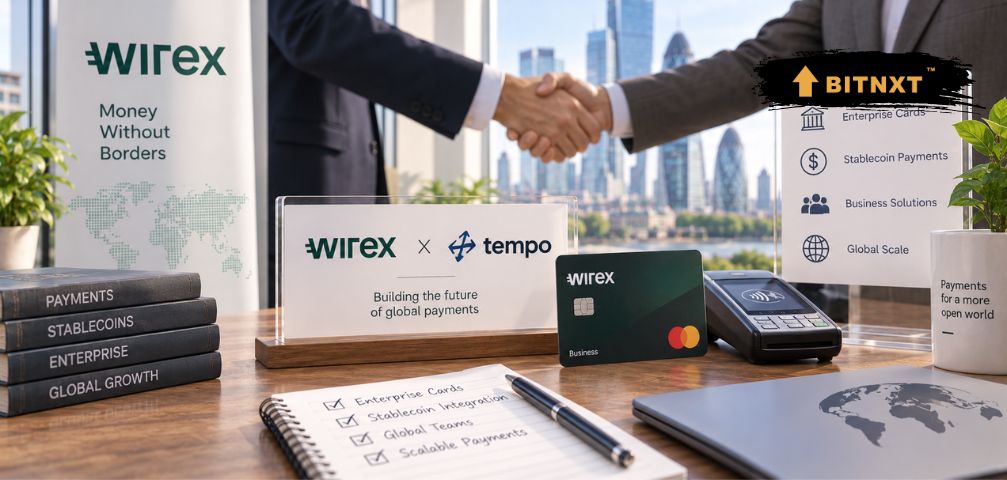
Wirex has integrated Tempo as a settlement layer for its enterprise stablecoin card programs, and the pairing is a clean snapshot of where payment infrastructure is heading. Wirex, a principal member of both Visa and Mastercard whose infrastructure passed $1 billion in annualized on-chain volume 131 days after launch and doubled that 110 days later, will let corporate card programs settle through Tempo, a payments-first layer 1 incubated by Stripe and Paradigm with sub-second finality, stablecoin-denominated fees, and a privacy framework called Tempo Zones. "We're adding Tempo as a settlement layer option to our banking and payment infrastructure, making it a key partner for enterprise stablecoin card programmes built through Wirex," the company announced on September 10. General Manager Daniel Rowlands described the goal as "fast, predictable and private settlement."
The commercial gap is notable: no enterprise clients were named, and transaction values, supported stablecoins, card availability, and launch markets were all undisclosed. The announcement is architecture, not customers, and it should be read that way.
Why the Wirex Tempo Deal Is About Gas, Not TPS
The technical logic explains why a card issuer would add a new chain to its settlement stack. Tempo's two enterprise-facing properties are the ones that actually matter for corporate cards. First, fees are stablecoin-denominated, which removes the native-token volatility that makes treasury teams allergic to most L1s: a company running card settlement does not want to discover that its gas budget doubled because a network token pumped. Second, Tempo Zones offer selective privacy, keeping transaction balances invisible to the public while granting counterparties and auditors controlled visibility, the feature set that separates B2B settlement from retail speculation. Tempo claims more than $1 billion in stablecoin transfers over 30 days, self-reported, and its advisory unit has worked with DoorDash, Deel, Klarna, Felix, and ARQ, which is the resumé of a chain trying to be plumbing, not a story. Wirex's side of the stack supplies the regulatory and network access that plumbing lacks, the Visa and Mastercard principal memberships that turn a blockchain settlement layer into a card program, adjacent to the same stablecoin payments wave where Visa's stablecoin settlement run rate crossed $20 billion and the UAE put in-store stablecoin payments in shoppers' hands.
The Unverified Numbers Problem
The honest ledger. Wirex's headline metric is annualized, which is a 131-day run rate extrapolated to a year, not cumulative settled volume, and Tempo's $1 billion 30-day figure is self-reported network activity, not audited Wirex card settlement. The deal also arrives with zero named clients, which in enterprise payments usually means the press release preceded the first live transaction, and the omission of fee structures and launch geographies leaves the compliance posture, always the long pole in corporate card programs, unaddressed. The competitive context is crowded: Tempo competes with every high-throughput chain pitching stablecoin settlement, and Wirex's differentiation is licenses, not blockchain code, a durable advantage only as long as issuers need it, in a market where 24/7 FX liquidity is still the unsolved constraint on real-time settlement claims.
Watch for the first named enterprise client and a real transaction volume figure. When a DoorDash-class company settles a payroll or payout through this stack, the architecture becomes a product. Until then it is a well-connected press release.


