
























.jpg)

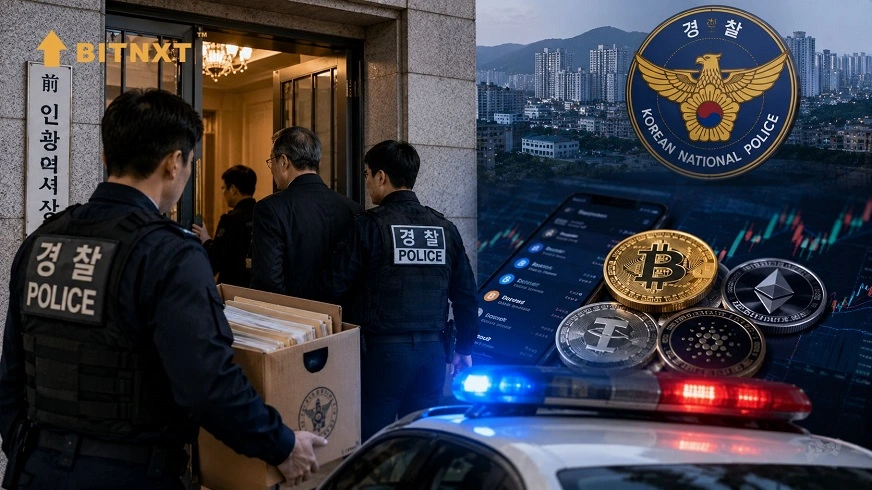
South Korean investigators have searched the home of former Incheon Mayor Yoo Jeong-bok, along with city government offices, as part of a widening probe into claims that he failed to disclose a substantial cryptocurrency holding during his run in June's local elections.
What Triggered the Raid
According to South Korea's Yonhap News Agency, officers from the Incheon Metropolitan Police Agency's Anti-Corruption and Economic Crime Investigation Unit carried out coordinated search-and-seizure operations on Sunday, targeting both Yoo's residence and the General Affairs Division of Incheon City Hall. Investigators reportedly collected mobile phones, computers, and other digital evidence tied to allegations that Yoo violated South Korea's Public Official Election Act.
At the center of the case is a claim that Yoo and his wife knowingly left out roughly 21,000 cryptocurrency tokens from their mandatory asset disclosure — a legal requirement for candidates running in South Korea's local elections — after allegedly moving the holdings to an overseas exchange shortly before filing.
How the Allegations Surfaced
The case first emerged about ten days before the June 3 election, when a rival campaign — that of candidate Park Chan-dae — filed a formal criminal complaint accusing Yoo of deliberately omitting the crypto assets from his required property declaration.
The Incheon City Election Commission followed up with its own review and eventually referred the matter to police after identifying what it considered possible violations of election law. The case gained further weight just a day before the vote, when the commission issued a public correction notice stating that Yoo's declared assets were understated by roughly 78 million won (around $56,000) compared to his actual holdings — a discrepancy investigators are now trying to determine was linked to the alleged crypto omission, and whether it was intentional.
You might also like: ICBC Settles China's First Digital Yuan Payment to Singapore — 10 Million Yuan in Shipping Fees, Delivered Same Day
Police have already questioned Yoo, his wife (identified only by her surname, Choi), and individuals connected to the rival campaign's complaint. The weekend raids appear aimed at gathering additional physical and digital evidence to support the ongoing inquiry, though authorities have not yet indicated whether formal charges will follow.
Part of a Broader Pattern in South Korea
This isn't an isolated case. South Korea has seen a string of investigations in recent months where digital assets intersect with political and regulatory scrutiny. In June, police searched the offices of major crypto exchange Bithumb as part of a separate probe into allegations that a sitting lawmaker used political influence to help his son secure employment at Bithumb and Upbit operator Dunamu.
South Korean regulators have also kept up broader oversight of the crypto sector on the compliance side — Bithumb, for instance, is currently contesting sanctions from the country's Financial Intelligence Unit over alleged anti-money-laundering and know-your-customer failures, with a court temporarily pausing enforcement of related business restrictions while litigation continues.
A Global Pattern of Scrutiny Around Officials' Crypto Holdings
The Incheon case also lands amid a broader international trend of increased attention on public officials' cryptocurrency disclosures. In the US, FBI Director Kash Patel recently came under scrutiny after disclosing a previously unreported stock purchase months past the legal deadline required under the STOCK Act — a case that, while different in nature, similarly reignited debate over financial transparency standards for senior public officials.
What Happens Next
The investigation into Yoo remains active, with police continuing to review evidence gathered from the weekend searches alongside prior testimony. No charges have been filed at this stage, and authorities have not confirmed whether additional individuals will be brought in for questioning as the case develops.


