





























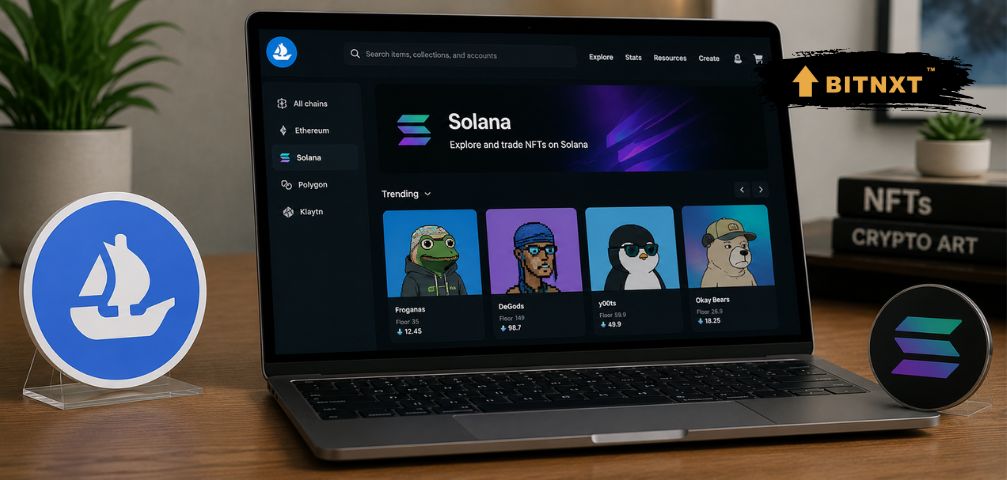
Filling the Solana gap in OS2
Solana fungible-token trading was already available through OS2 before the release. Adding NFT functions completes the platform's coverage of the network, since users can now trade both types of Solana assets through one account. The launch includes Mad Lads, Claynosaurz, Collector Crypt and Phygitals, among other collections built on the network.
Released publicly in May 2025 after a testing period, OS2 initially offered token trading across 19 chains, introducing cross-chain features, marketplace aggregation and support for tokens alongside the NFT products associated with OpenSea's original business. By Aug. 27, the company said its market data covered more than 25 networks, and four days before the Solana announcement it connected that data to Perplexity Computer, letting the AI service answer questions about tokens, collectibles and onchain trading activity. CEO Devin Finzer described the data used by AI agents as "open, live, and verifiable."
Competition on Solana heats up
For Solana collectors, the release adds another venue for collections that have largely depended on marketplaces with established presence on the network. Magic Eden began as a Solana-focused platform before adding other ecosystems, while Tensor has built products around professional Solana NFT traders. OpenSea's entry creates more overlap among the marketplaces, though the company did not provide trading-volume targets, user projections or market-share estimates for its Solana product.
The release also restores a service OpenSea tested years earlier. In April 2022, the marketplace introduced Solana NFT support in beta, making Solana its first supported non-Ethereum Virtual Machine network. The new OS2 implementation brings Solana collections back into the fold more than four years after that initial test — a sign of how central the network has become to the broader trading economy, from governance votes making headlines to institutional products.
Marketplaces become platforms
Competition now extends beyond individual listings because the largest marketplaces have added networks, wallets and token products to retain users. OpenSea's July 2025 acquisition of Rally Wallet added a mobile-first wallet business focused on NFTs and tokens, with Rally co-founder Chris Maddern joining as chief technology officer, giving the company a route to mobile trading without separating token activity from NFT portfolio management.
OpenSea has also explored derivatives. In June, product executive Zack Brenner asked users about early access to perpetual futures and later indicated Hyperliquid could supply the infrastructure — a move that would place the marketplace closer to crypto platforms combining spot tokens, derivatives and rewards, though no release date or final terms have been announced.
SEA token still in limbo
The product momentum comes while OpenSea's SEA token remains delayed. The company introduced SEA in February 2025 and initially expected release around March 30, 2026, with proposed uses including governance, reduced trading fees and staking linked to NFT collections. In March, Finzer postponed the launch citing difficult market conditions and did not provide a replacement date, while users who joined parts of the Waves rewards campaign received an option to recover certain platform fees by giving up associated Treasure Chest rewards.
For U.S. users, the expansion follows the SEC's decision to end an investigation into OpenSea without charges after issuing a Wells notice in August 2024. Finzer called the closure a victory for NFT creators, though it did not create a general exemption for every NFT or marketplace. Solana NFT support advances the product side of OpenSea's multi-asset plan without resolving the SEA schedule — the regulatory environment keeps shifting around marketplaces of every kind, and OpenSea is building through it.


