





























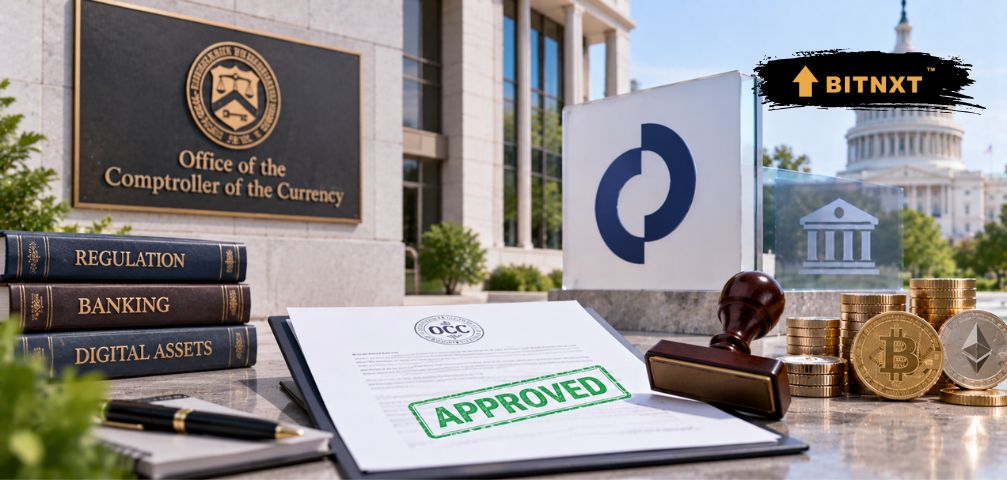
OpenReserve has won preliminary approval from the Office of the Comptroller of the Currency to organize a full-service insured national bank in Salt Lake City — the latest conditional green light for a crypto-connected bank, and one of the few aiming at insured deposits and conventional lending rather than the limited-purpose custody charters most digital asset firms have pursued.
The OCC granted the preliminary conditional approval on Sept. 2, roughly five months after OpenReserve applied on April 13. The proposed bank plans deposit products — potentially with tokenized capabilities — commercial and retail lending, treasury management, payments and foreign correspondent banking, with digital asset custody through a subsidiary and stablecoin support for cross-border remittances. It could even receive transaction fees in cryptocurrency, though it would generally need to convert those assets into fiat within one business day, with an exception for paying anticipated blockchain gas fees. "OpenReserve Bank is our contribution to that tradition: durable financial infrastructure, built in the United States," CEO Dee Choubey said. The a16z crypto account highlighted the design:
"This week the OCC granted conditional approval for a full-service U.S. national bank charter application to @OpenReserveBank. Founders Dee Choubey and Rick Correia discuss designing a financial institution around 24/7 settlements, stablecoins, tokenized deposits, and onchain…" — a16z crypto (@a16zcrypto), September 3, 2026
What OpenReserve must do before it opens
The approval is a starting gun, not a finish line. OpenReserve must raise at least $210 million in initial paid-in capital after organizational and preopening expenses, maintain a tier-one leverage ratio of no less than 12% during its first three years, apply for Federal Reserve Bank stock and obtain deposit insurance from the FDIC — the charter application was filed jointly with the federal deposit insurance application. The clock is unforgiving: capital must arrive within 12 months of the conditional approval, and banking operations must begin within 18 months or the approval expires, except for circumstances beyond the organizers' control. The company must notify the OCC at least 60 days before its proposed opening date and pass a preopening examination covering operational readiness, governance, compliance and technology. OpenReserve has announced seed backing from Andreessen Horowitz, Jump Capital, Coinbase Ventures, Wintermute Ventures and other investors, without disclosing amounts or how much counts toward the $210 million.
The stablecoin piece is conspicuously unfinished. OpenReserve plans a wholly owned subsidiary to issue, hold, convert and process U.S. dollar-backed stablecoins — but the OCC noted that application has not been filed, and any stablecoin activities must comply with the GENIUS Act and its implementing regulations, with the regulator retaining sole discretion over whether the structure qualifies. The bank must also give 60 days' notice before materially changing its business plan and cannot proceed until the OCC issues a written determination of no objection. Security and compliance programs — Bank Secrecy Act, sanctions, credit risk, information security, an independent auditor, GAAP financial statements, independent platform testing against unauthorized access and denial-of-service attacks, and OCC approval of the final technology architecture — all precede launch.
Why this charter differs from the pack
Most of the OCC's recent digital asset approvals have been limited-purpose national trust banks focused on custody and settlement. OpenReserve's insured-deposits-and-lending model distinguishes it from firms like Crypto.com, whose proposed trust bank would not accept deposits or issue traditional loans — and aligns it with the stablecoin business accounts now reaching market and the banking-crypto infrastructure fusions announced this week. The OCC listed 13 pending digital asset applications in August as Comptroller Jonathan Gould encouraged permissible crypto businesses to pursue national charters, and federal rulemaking elsewhere is converging on the same destination.
The honest caveat is that preliminary approvals are cheap and failures are quiet. Revolut's conditional OCC approval, Crypto.com's trust bank filing and OpenReserve's charter all share a pattern: headlines at announcement, then years of capital raises, examinations and conditions before a single customer opens an account. OpenReserve's $210 million raise, its unfiled stablecoin application and its 18-month fuse are the real story — a full-service bank built around 24/7 settlement and tokenized deposits is now a matter of execution, and the OCC has made clear it can modify, suspend or withdraw the approval before the doors open. But the direction is unmistakable: the regulated U.S. bank of the near future is being designed with stablecoins, tokenized deposits and onchain settlement as native features rather than add-ons.


