





























Atkins wants statutory grounding for crypto rules
The SEC chair posted that the agency's Regulation Crypto Assets proposal is its most historic step yet to cement America as the crypto capital of the world, calling it consonant with the belief that Congress should send the CLARITY Act to the president's desk. "Our goal is to get them adopted, to get them taken up by the industry," Atkins said, while adding that "what we really do need though is statutory grounding."
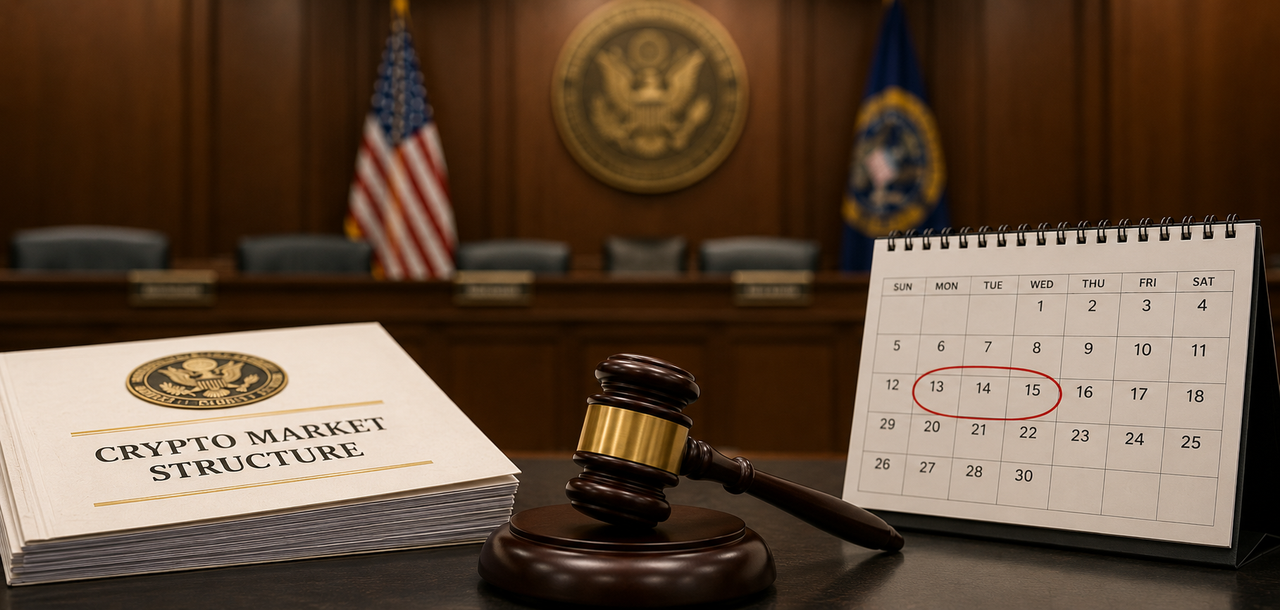
That last point matters. Rules grounded in an act of Congress are harder for a future commission to reverse, giving the industry a firmer legal base than agency rulemaking alone can provide. The comments come before a scheduled cloture vote on Sept. 15 at 2:15 p.m. ET, when senators will decide whether to end procedural delay and move toward floor debate, amendments and eventual passage. The motion needs 60 votes in the closely divided chamber.
Senate Majority Leader John Thune filed cloture on the motion to proceed before lawmakers left Washington for their August recess. Failure to secure 60 votes would prevent the chamber from moving directly to a final vote under the current schedule. The bill's narrow window has already been documented, with prediction markets cutting its odds sharply after the Senate adjourned without acting in August.
Split odds and a tight timetable
Questions about the bill's prospects persist despite Atkins' optimism. SALT CEO John Darsie said he remains doubtful that lawmakers will finish the measure this year. "Personally, I'm somewhat bearish on the CLARITY Act passing," Darsie said, citing the political timetable ahead of the midterm elections.
Kalshi traders placed the probability of the legislation becoming law in 2026 at 49%, leaving the prediction market almost evenly divided. Earlier estimates varied sharply during the year, with one platform showing 82% in February before dropping to about 16% by early August.
The House passed the legislation by a 294-134 vote in July 2025, while the Senate Banking Committee advanced its version 15-9 in May with two Democrats joining 13 Republicans. Republicans hold 53 Senate seats but cannot reach the cloture threshold alone, meaning party leaders need more Democratic votes than the two received at the committee stage.
SEC prepares a fallback framework
The CLARITY Act would establish federal rules for deciding when a digital asset falls under the SEC or the Commodity Futures Trading Commission, create registration requirements for crypto companies and apply anti-money laundering obligations to covered businesses. Several disputes remain unresolved, including whether companies should pay rewards to stablecoin holders, how to protect decentralized finance developers and whether federal ethics rules should cover public officials with crypto holdings.
Alongside the congressional negotiations, the SEC has continued working on rules that do not depend on the bill becoming law. The commission proposed Regulation Crypto Assets on Aug. 18, including a $5 million exemption for startups, a $75 million fundraising exemption and safe harbors that could let many blockchain projects operate without full securities registration. The transfer agent overhaul for tokenized securities shows how the agency is building a full framework piece by piece.
For the crypto industry, the Sept. 15 vote is the clearest test yet of whether this Congress will deliver comprehensive market structure legislation or leave the task to agency rulemaking and the next session.


