































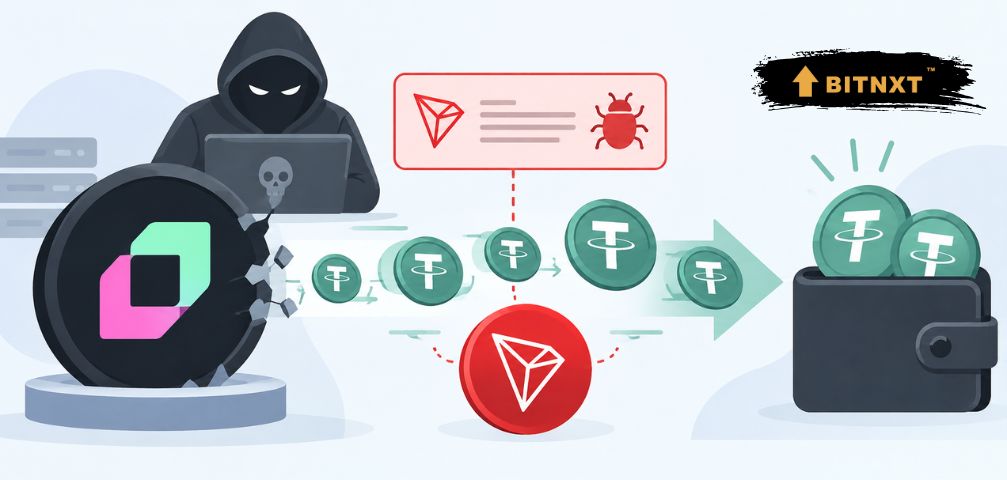
The Chainflip exploit that paused the cross-chain protocol on September 12 came with an exact price tag: 736,442.17 USDT, taken across six unauthorized payouts after an attacker found a way to make the protocol pay for the same deposit twice. The mechanics are the uncomfortable part. Chainflip's system relies on TRON transaction memos to identify swaps, and the attacker took a transaction pre-signed by Chainflip validators, attached a new memo to it, and sent it on its way. The protocol read the modified memo as a fresh swap attempt. When that phantom swap appeared to fail, the system issued an automatic refund, even though the original deposit had already paid out. Eight deposit attempts ran in roughly 90 minutes early on September 12, starting small and doubling in size as the attacker confirmed the trick worked.
Chainflip confirmed the incident on September 13: "736,442.17 USDT was taken. All other funds are unaffected and secure, and impacted users will be made whole. The network stays paused while we finalise the fix and the restart plan." One swap worth 115,654.41 USDT remains unpaid in the vault and will release after the restart, which the team framed as "until Monday at the earliest" — September 14, with no promises attached.
What the Chainflip Exploit Says About Memo-Based Bridges
The vulnerability class matters more than the dollar amount. Cross-chain protocols bridging non-EVM chains like TRON often use transaction memos, the free-text field attached to a transfer, as their messaging layer, because TRON's USDT lacks the immutable contract-call guarantees of an EVM transfer. That design delegates a security-critical function, swap intent, to a mutable, attacker-editable field, and Chainflip's validators signed payouts without verifying what happened to the memo after signing. It is the same family of trust failure as the fake-deposit bridge drain on XRP Ledger, where protocol assumptions about transaction content met an attacker willing to forge that content, and it lands in a month where August crypto losses ran 67% above the prior year. For a sector that has spent years hardening smart contracts, the lesson is that the soft plumbing around them, parsing, refunds, memo handling, is now the attack surface of choice.
The Response and What Is Still Unknown
To its credit, Chainflip moved conventionally and quickly: operations paused, the underlying fix completed, a promised full reimbursement for impacted users, and the damage limited strictly to TRON USDT, with no other assets, the TRON chain itself, USDT's contract, or Tether reserves touched. But three things are conspicuously open. The restart date is non-binding. The reimbursement source, treasury or insurance, is undisclosed, and pausing swaps stops fee income precisely when the protocol most needs reserves. And the preliminary update omits transaction hashes and any external audit, so the community is trusting the incident report on faith. A similar non-EVM attack pattern surfaced earlier this year in the $8 million Coinsbuy TRON-Ethereum attack, which makes independent verification less of a formality than a pattern check.
Why Reimbursement Culture Is Now Table Stakes
The quiet industry shift this incident confirms: users now assume they will be made whole, and protocols budget for it. That social contract is good for adoption and quietly corrosive for risk pricing, because a reimbursement norm lets teams ship memo-based architectures knowing losses are survivable, while the next uninsured protocol may not have the treasury. Chainflip's first critical vault loss was survivable at $736,000. The same bug class at ten times the scale, on a memo-parsing bridge with deeper vaults, is the scenario nobody has priced.
Watch the restart this week, the reimbursement execution, and whether the postmortem includes the promised hashes. If Chainflip publishes a full technical breakdown with third-party review, it sets a good precedent for memo-bridge disclosure. If it quietly resumes, the sector keeps learning about memo handling from attackers instead of auditors.


