





























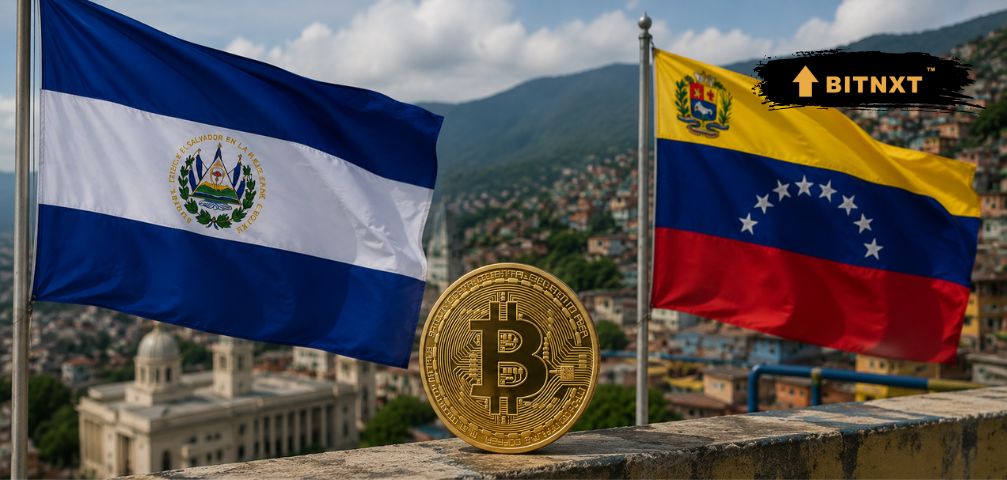
Adoption follows economic pressure
El Salvador led the ownership ranking, with 72% of respondents saying they had owned Bitcoin at some point. Venezuela and Nigeria reported high exposure despite facing different monetary and regulatory conditions. The researchers found Bitcoin often works as a "pragmatic workaround" in economies where residents struggle to protect savings, obtain dollars or use reliable banking services.
One Venezuelan respondent described Bitcoin as "faster, cleaner, and less risky" than other methods of obtaining dollars. TRM Labs data supports the picture, ranking the country 17th for retail crypto activity in the first quarter of 2026 with an estimated $17.9 billion in attributed volume, and showing USDT accounted for 90.2% of active Binance peer-to-peer listings involving the bolivar in April.
In Nigeria, one participant told researchers that Bitcoin had eased the financial burden of travel: "I've visited six African countries and felt no worries because I knew I could spend Bitcoin." The index also found men more likely than women to own Bitcoin in every surveyed country, people aged 30 to 44 the most consistent owners, and, in 23 of 25 countries, lower-income respondents reporting the highest ownership rates.
Ownership is not the same as daily use
El Salvador's top ranking follows more than five years of government support since the country adopted Bitcoin as legal tender in September 2021 and launched the Chivo wallet with a $30 incentive. An El Salvadoran participant captured the appeal in one line: "no one controls Bitcoin, which means we all own it."
But the data measures whether respondents have ever held Bitcoin, not whether they continue using it for payments. A Universidad Centroamericana survey found only 8.1% of Salvadorans used Bitcoin to buy goods in 2024, down from 25.7% in 2021. The country also revised its Bitcoin rules after reaching a $1.4 billion financing agreement with the IMF in February 2025, making acceptance voluntary for businesses and ending government-guaranteed conversions.
Knowledge lags far behind awareness
Ownership did not come with understanding of Bitcoin's core features. The report found 58% of respondents were unaware the protocol limits total supply to 21 million coins. In the United States, about 85% of Americans had heard of Bitcoin and 38% considered themselves knowledgeable, yet only 6% knew the supply cap. Some 24% of U.S. respondents had owned Bitcoin at some point.
Across all 25 countries, respondents gave Bitcoin an average trust score of 4.67 out of 10, with traditional assets like gold, real estate and national currencies receiving higher ratings. Financial pressure was associated with higher trust: in 22 of 25 countries, respondents who distrusted their government were more likely to own Bitcoin. Japan anchored the other end of the table, with 88% of respondents never having owned the asset.
Former owners outnumbered current owners in 18 of the 25 surveyed countries, a finding that suggests the path from first purchase to sustained user remains steep even in high-adoption markets. The study arrives as broader market structure debates, from network decentralization research to institutional flows, dominate headlines, while Cornell's data grounds the story in how ordinary people around the world actually encounter Bitcoin.


