






























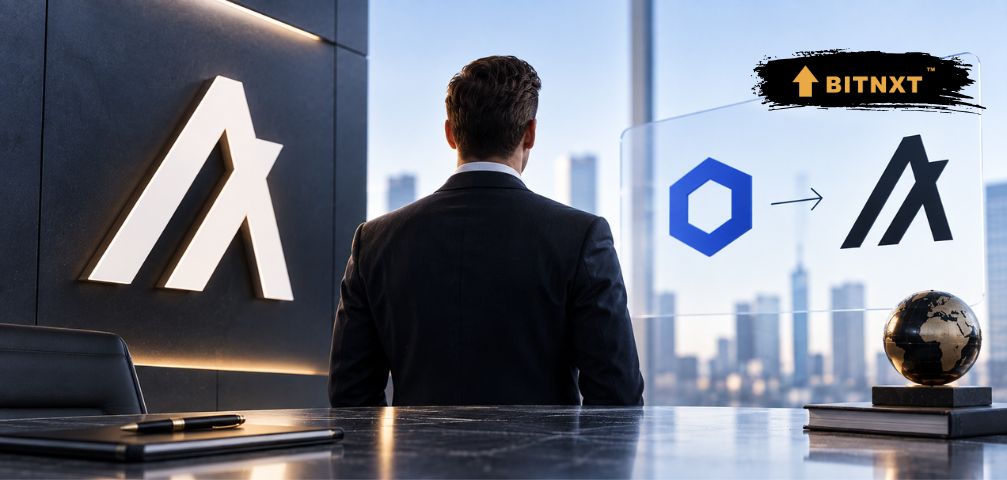
Algorand has named William Herkelrath as CEO, effective August 31, succeeding Staci Warden after nearly five years leading the foundation, and the hiring says more about the L1's strategy than any roadmap slide could. Herkelrath is a business development executive, not a crypto native: he led global business development and institutional capital markets partnerships at Chainlink, and before that was VP of business development at digital asset custody firm Curv, which PayPal acquired for $200 million in 2021. His mandate is institutional finance, and he is not coy about it. "Algorand's technical architecture, instant finality, zero downtime, and deterministic performance, is purpose-built for institutional capital markets," Herkelrath said. "My focus is translating that technical superiority into commercial scale and enterprise adoption."
Notice what that sentence does not mention: DeFi TVL, retail growth, grants. Algorand has spent years with arguably the best technical specifications among layer-1s and consistently middling results in developer mindshare and total value locked against Solana, Avalanche, and Ethereum's L2 swarm. The foundation's answer, now explicit, is to stop competing for the retail narrative and sell infrastructure to institutions instead, prioritizing enterprise integration, real-world asset tokenization, capital markets plumbing, and cross-chain financial connectivity.
The Chainlink Playbook Applied to Algorand
Herkelrath's specific value is a relationship network. His Chainlink tenure put him in rooms with SWIFT, DTCC, and the global banks that dominate the tokenization pilot pipeline, the same institutional wave already visible in Hanwha building tokenized securities on Avalanche and ARK asking the SEC to approve tokenized share classes. Algorand's bet is that those conversations convert better with a known institutional operator in the CEO chair than they did with community-led growth, and that Algorand's deterministic finality, a real technical advantage for settlement, gives the pitch substance once the door is open. Warden's exit, five years in, reads as a governance reset too: accountability shifts from ecosystem expansion metrics to institutional assets onboarded.
The skeptic's ledger is straightforward. Institutional sales cycles in banking and capital markets run 12 to 24 months before measurable on-chain volume appears, so this strategy cannot show results inside two quarters, and the tokenization lane is the most contested in crypto, with Ethereum L2s, Avalanche subnets, and permissioned enterprise ledgers all courting the same banks. Herkelrath's Chainlink playbook worked because Chainlink plugged into every chain and every bank; Algorand is one chain selling itself to the same banks. Distribution helped Chainlink because the product was chain-agnostic. Algorand's product is the chain itself, and network effects still have to be earned the hard way. There is also the treasury question: foundations funding institutional pushes through a market turnaround must balance spending against token liquidity, and nobody discloses that balance sheet.
According to Algorand, support for post-quantum signatures was included in the v42 consensus upgrade.
What Would Prove the Pivot
Concrete signals, not sentiment, will grade this hire: a named banking or market-infrastructure partner within two quarters, RWA issuance volume on Algorand that a third party can verify, and developer activity that does not fall while the retail narrative is deprioritized. The ALGO market has repriced on leadership news before and retraced after, so treat the immediate reaction as noise.
Watch the first institutional announcement with Herkelrath's name on the press release. If it is a bank or a settlement house, the pivot is real. If it is a pilot with a fintech, it is the same Algorand story with a better-dressed messenger, and the window for differentiation does not stay open forever.


