



























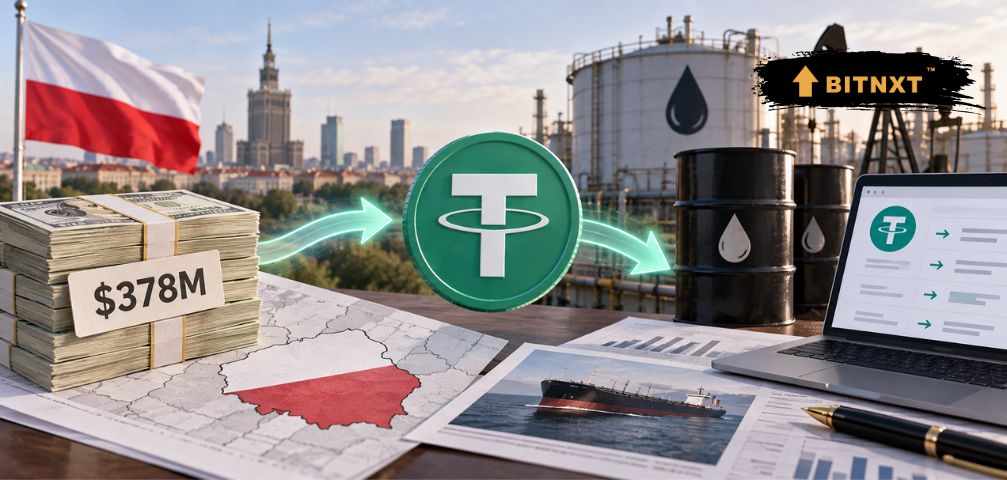
A $378 million criminal indictment in Warsaw has become the clearest case study yet of what happens when state-scale oil trading moves onto stablecoins, because Financial Times reporting published September 15 reveals the money at the heart of Poland's biggest energy scandal moved largely as Tether. The case centers on Orlen Trading Switzerland, the Swiss arm of Polish state energy group Orlen, which in late 2023 agreed to buy roughly 6 million barrels of Venezuelan Merey 16 crude valued near $345 million, advancing about $330 million, $230 million through Dubai intermediary Hannon International and $100 million through Horizon Global, to Venezuelan state oil firm PDVSA. The crude never arrived in the volumes promised. On August 7, 2026, the Warsaw Regional Prosecutor's Office indicted three former OTS executives over three contracts causing $378 million, about 1.5 billion zloty, in alleged damages, with potential sentences up to 25 years, while former OTS chief Samer A. was detained in the UAE in January 2025 under an Interpol Red Notice and faces extradition.
The detail that turns a procurement scandal into a crypto story: the FT found Hannon's $230 million advance was "largely transferred as Tether (USDT)" through intermediaries to Venezuelan brokers, as PDVSA demanded crypto prepayments of up to 50% to keep operating around U.S. sanctions.
How USDT Became the Rail for Sanctioned Oil
The mechanics explain the loss as much as the fraud does. U.S. sanctions cut PDVSA off from dollar clearing, so the Venezuelan firm pushed settlement into stablecoins and offshore middlemen, and the Polish side's own minister, Adam Szłapka, publicized the indictment's texture on social media: intermediaries, cryptocurrencies, and "pendrives handed over in restaurants in Caracas." Once payment left the banking system, it also left the system's protections: no escrow, no documentary credit, no correspondent bank accountable for delivery-versus-payment. The prepayment structure, an uncollateralized $330 million advance against future barrels routed through two Dubai intermediaries, would have been rejected by any trade-finance desk operating inside regulated rails, and the fact that the FT's broader damage estimate, about $424 million including demurrage for waiting tankers and legal costs, exceeds the indictment figure shows how much friction the workaround itself created. This is the same sanctions-pressure pattern that has pushed other state energy flows toward token settlement, and it rhymes with the stablecoin adoption that jurisdictions as different as the UAE have formalized around assets like tokenized gold's acceptance in ADGM, except here the token was the evasion instrument, not the product.
What the Orlen Case Actually Proves About Stablecoins
The honest analysis cuts against the crypto industry's usual framing, and it deserves precision. USDT did not cause the loss, the counterparty defaults did, and the indictment alleges fraud by the intermediaries and executives, not a failure of the token. But the case is the strongest evidence yet that stablecoins in sanctioned trade do not disintermediate risk, they relocate it into opacity: the transfer chain Hannon to intermediaries to Venezuelan brokers, settled in USDT through restaurants and pendrives, was cheap, fast, and totally unauditable, and every dollar of the $230 million that left that chain became effectively unrecoverable the moment delivery failed. For Tether specifically, the case is the reputational mirror image of its institutional ambitions: the same freeze-and-censor capability that regulators criticize is the only mechanism by which such funds could ever have been clawed back, and no such action features in the record so far. For governments, the lesson Poland learned expensively is that when a counterparty demands 50% crypto prepayments, that is not a payment preference, it is a risk disclosure, and state firms buying sanctioned crude through Dubai shells with stablecoin rails were underwriting the evasion structure's counterparty risk with public money.
What to Watch
Watch the Warsaw trial, which will test whether the "unproven allegations" framing survives evidence about who knew the barrels were never coming; watch the extradition of the former OTS chief from the UAE, which will show how far Polish prosecutors can reach into the intermediary chain; and watch the enforcement follow-through on the stablecoin leg, because if sanctioned-state USDT flows start drawing direct freezing actions, this case will have been the moment the precedent was visible to everyone. The barrels never came. The money moved perfectly, which was the problem.


