





























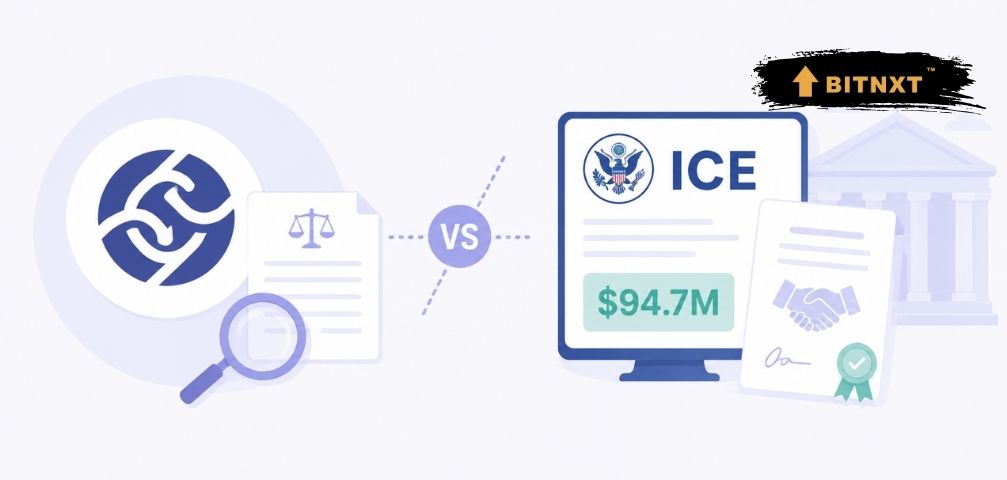
Chainalysis has filed a legal challenge in the U.S. Court of Federal Claims over Immigration and Customs Enforcement's $94.7 million sole-source contract award to rival blockchain analytics firm TRM Labs.
Sole-Source Award Disputed
Chainalysis Government Solutions, the public sector arm of the blockchain analytics company, filed the challenge arguing that ICE's decision to route the award to TRM Labs on a sole-source basis was arbitrary, capricious and unreasonable. The contract, valued at approximately $94.66 million, was awarded without competitive bidding, which Chainalysis contends violated federal procurement requirements. The company said it had the capability to fulfill the contract terms and should have been given the opportunity to compete. Sole-source contracts in federal procurement are typically reserved for situations where only one provider can meet the government's needs, and Chainalysis argues that condition was not met in this case.
TRM Labs Intervened in the Case
TRM Labs intervened in the case on July 28, joining the government as a defendant. The Court of Federal Claims scheduled responses from the government and TRM for late August, with oral argument set for Sept. 2. The expedited timeline suggests the court recognizes the urgency of the procurement dispute, as the contract covers cryptocurrency investigation tools used by ICE for tracking illicit blockchain transactions. TRM Labs has been expanding its government business, securing contracts with multiple federal agencies for blockchain analytics and crypto forensics capabilities. The company's intervention indicates it intends to defend the award rather than allow the government to handle the case alone.
Competition for Government Crypto Analytics
The dispute highlights the growing competition among blockchain analytics firms for lucrative government contracts. Chainalysis and TRM Labs are two of the leading providers of cryptocurrency investigation tools used by law enforcement agencies to trace illicit transactions, identify wallet owners and support criminal investigations. The federal government has significantly increased spending on crypto analytics tools as digital asset adoption has expanded and agencies require specialized capabilities to track sanctions evasion, money laundering and fraud. The $94.7 million ICE contract represents one of the larger federal awards in the blockchain analytics space, making the procurement process particularly significant for the companies involved.
Potential Impact on Federal Procurement
A favorable ruling for Chainalysis could require ICE to reopen the process to competitive bidding or provide a more robust justification for the sole-source award. Federal procurement law generally favors full and open competition, with sole-source awards subject to heightened scrutiny. If the court finds that ICE did not adequately justify the sole-source approach, it could set a precedent affecting future government contracts for blockchain analytics services. The ruling could also influence how other federal agencies structure their procurement processes for crypto investigation tools, potentially leading to more competitive bidding opportunities. The case is being closely watched by other blockchain analytics firms that have been building government-facing capabilities.
Broader Context of Crypto Enforcement
The contract dispute comes amid increased federal focus on cryptocurrency enforcement. Multiple agencies, including the Department of Justice, Treasury Department and FBI, have expanded their use of blockchain analytics tools to investigate crypto-related crimes. The Treasury Department has sanctioned multiple cryptocurrency addresses linked to North Korean hacking groups, ransomware operators and other illicit actors. Law enforcement agencies rely on tools from companies like Chainalysis and TRM Labs to trace funds through mixers, cross-chain bridges and decentralized exchanges. The ICE contract specifically covers tools for investigating cryptocurrency transactions related to immigration and customs enforcement, including tracking funds moved by transnational criminal organizations.


